Tuesday, November 6, 2018

The Atlas of Disease by Sandra Hempel

book cover
The Atlas of Disease
by Sandra Hempel


ISBN-13: 9781781317907
Hardback: 224 pages
Publisher: White Lion Publishing
Released: Oct. 30, 2018

Source: ebook review copy from the publisher through NetGalley.

Book Description, Modified from Goodreads:
Behind every disease is a story, a complex narrative woven of multiple threads, from the natural history of the disease, to the tale of its discovery and its place in history.


My Review:
The Atlas of Disease explores major diseases and epidemics. The author looked at diphtheria, influenza, leprosy, measles, scarlet fever, SARS, smallpox, tuberculosis, cholera, dysentery, typhoid, malaria, plague, typhus, yellow fever, Zika, polio, Ebola, AIDS, and syphilis. She talked about the history of the disease, including quotes from historical people talking about what the disease was like during normal, local appearances or during epidemics or in perhaps the first recorded mentions of a disease. She talked about what may have caused a disease to turn into an epidemic (like war, trade, etc.) and also where the disease is currently still a problem.

While adequate, I had expected more maps and more detailed maps in an atlas. There was usually one or two maps per disease, showing things like the spread of the disease during a certain outbreak. They were usually either color-coded chunks on a map or color-coded arrows indicating the general spread of the disease. While the author did talk about how maps were used to identify the source of the cholera during an epidemic, maps were not the focus of the text but illustrations of what was stated in the text. I found the information about how the diseases were treated and viewed in the past and the present to be interesting.


If you've read this book, what do you think about it? I'd be honored if you wrote your own opinion of the book in the comments.


Excerpt: Read an excerpt using Google Preview.

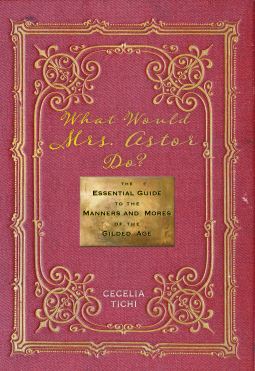
What Would Mrs. Astor Do? by Cecelia Tichi

book cover
What Would Mrs. Astor Do?
by Cecelia Tichi


ISBN-13: 9781479826858
Hardcover: 352 pages
Publisher: NYU Press
Released: Nov. 6, 2018

Source: ebook review copy from the publisher through NetGalley.

Book Description, Modified from NetGalley:
Mark Twain called it the Gilded Age. Between 1870 and 1900, the United States’ population doubled, accompanied by an unparalleled industrial expansion, and an explosion of wealth unlike any the world had ever seen. America was the foremost nation of the world, and New York City was its beating heart. There, the richest and most influential became icons, whose comings and goings were breathlessly reported in the papers of Joseph Pulitzer and William Randolph Hearst.

As the Old Money titans found themselves besieged by a vanguard of New Money interlopers, Mrs. Astor, an Old Money heiress, dictated proper behavior and demeanor, men’s and women’s codes of dress, acceptable patterns of speech and movements of the body, and what and when to eat and drink. An invitation to her annual ball was a golden ticket into the ranks of New York’s upper crust.

This work serves as a guide to manners as well as everything from the perfect table setting to the array of outfits the elite wore at the time. Cecelia Tichi paints a portrait of New York’s social elite, from the schools to which they sent their children, to their lavish mansions and even their reactions to the political and personal scandals of the day.


My Review:
What Would Mrs. Astor Do? talked about upper class society in New York during the 1870 to 1900 period. The author provided brief biographies of the people who set the trends (like Mrs. Astor), quoted people who lived during that period talking about what it was like, quoted etiquette manuals as to proper behavior (for dining, funerals, etc.), and quoted magazine or newspaper articles talking about what the fashionable set wore or did. She also talked about how people reacted to new inventions, like electricity and telephones, or new trends, like eating lobsters or department stores.

Some of the topics covered were: fashionable house furnishing, lady's department stores, where men got their clothing, gentlemen's clubs, lady's clubs, dining out, hat styles, walking canes, cars, horseback riding, sports, bicycles, fashionable color combinations for clothing, what to wear for many different occasions, street etiquette, letter writing, calling cards, what the fashionable ate and drank, theaters, restaurants, Central Park, Newport, the Bowery, sailing, train travel, ocean liners, Wall Street, schools, views on divorce, and funerals.


If you've read this book, what do you think about it? I'd be honored if you wrote your own opinion of the book in the comments.


Friday, November 2, 2018

Magnificent Fantasy Creatures and How to Draw Them by Kev Walker

book cover
Magnificent Fantasy Creatures and How to Draw Them
by Kev Walker


ISBN-13: 9781440354601
Paperback: 160 pages
Publisher: Impact
Released: Oct. 9, 2018

Source: ebook review copy from the publisher through NetGalley.

Book Description, Modified from Goodreads:
Discover how to draw 30 fantastical beasts from folklore, literature and the farthest reaches of your imagination in this how-to-draw guide. As you explore each magnificent creature you'll not only discover a detailed finished illustration along with exciting ideas, hints and practical lessons for how to recreate it. Blank practice pages built into the book ensure you have plenty of space for practicing techniques like adding movement and texture to your beasts of lore.


My Review:
Magnificent Fantasy Creatures is about finding inspiration for and the process of deciding what your fantasy creatures will look like. It's not a step-by-step to drawing his fantasy creatures. The intent of the book is to help you come up with your own fantasy creature designs.

He talked about real animals that inspired him, hints about posing the creature, and various ways you might draw the claws, teeth, etc., and what impression these variations might give (like longer claws make them look more dangerous). Each page had a matching "now you practice it" or "now draw your water dragon" blank page, so half the book was blank practice pages. He made up lore about and gave suggestions for 29 fantasy creatures that live in the night, sea, desert, swamp, forest, and snow.


If you've read this book, what do you think about it? I'd be honored if you wrote your own opinion of the book in the comments.


Tuesday, October 30, 2018

The Golden Ratio by Gary Meisner

book cover
The Golden Ratio
by Gary Meisner


ISBN-13: 9781631064869
Hardback: 224 pages
Publisher: Race Point Publishing
Released: October 23, 2018

Source: ebook review copy from the publisher through NetGalley.

Book Description, Modified from Goodreads:
The Golden Ratio examines the presence of this divine number in art and architecture throughout history, as well as its ubiquity among plants, animals, and even the cosmos. This gorgeous book features clear, entertaining, and enlightening commentary alongside stunning full-color illustrations by Venezuelan artist and architect Rafael Araujo.

From the pyramids of Giza, to quasicrystals, to the proportions of the human face, the golden ratio has an infinite capacity to generate shapes with exquisite properties.

With its layflat dimensions that closely approximate the golden ratio, this is the ultimate coffee table book for math enthusiasts, architects, designers, and fans of sacred geometry.


My Review:
The Golden Ratio is a look at phi and if it really is found in art, architecture, and nature as much as is claimed. The author started with a history of the development of phi and how it relates to pi. I enjoy math, but the author didn't spend much time explaining phi at a common person's level, so his points and formulas were sometimes lost on me. I assume the target audience is mathematicians and such who already understand how phi is used.

The author then talked about how the Golden Ratio has been used and can be found in things like art, architecture, nature, logos and even at a molecular level. He talked about his Golden Ratio finding software and how this has been used to examine art, architecture, etc., to see if the Golden Ratio really is found. He would show a picture of the object with these ratios overlaid as outline-only boxes of different colors.

Unfortunately, the boxes often weren't clear either due to overlaps (several boxes starting along the same line but only one color being shown) or the box's line color blending in with the background color. He strongly made the point that the Golden Ratio was found in these things. But unless he explained the starting and ratio points in the text (and sometimes he did), I often couldn't clearly see what the boxes were showing and so couldn't appreciate the full impact. Perhaps these boxes will be easier to see in the printed book. While a lovely book, I felt like I wasn't understanding enough of what was explained or shown in the book.


If you've read this book, what do you think about it? I'd be honored if you wrote your own opinion of the book in the comments.


Tuesday, October 23, 2018

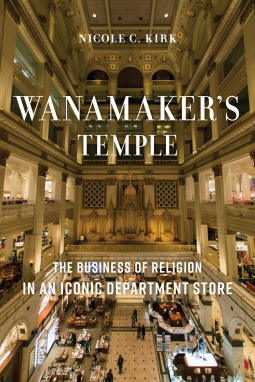
Wanamaker's Temple by Nicole C. Kirk

book cover
Wanamaker's Temple
by Nicole C. Kirk


ISBN-13: 9781479835935
Hardback: 288 pages
Publisher: NYU Press
Released: Oct. 23, 2018

Source: ebook review copy from the publisher through NetGalley.

Book Description, Modified from Goodreads:
How a pioneering merchant blended religion and business to create a unique American shopping experience. Remembered for his store’s extravagant holiday decorations and displays, Wanamaker built one of the largest retailing businesses in the world and helped to define the American retail shopping experience. From the freedom to browse without purchase and the institution of one price for all customers to generous return policies, he helped to implement retailing conventions that continue to define American retail to this day.

Wanamaker was also a leading Christian leader, participating in the major Protestant moral reform movements from his youth until his death in 1922. But most notably, he found ways to bring his religious commitments into the life of his store. He focused on the religious and moral development of his employees, developing training programs and summer camps to build their character, while among his clientele he sought to cultivate a Christian morality through decorum and taste.

Wanamaker’s Temple examines how and why Wanamaker blended business and religion in his Philadelphia store, offering a historical exploration of the relationships between religion, commerce, and urban life in the late nineteenth and early twentieth century and illuminating how they merged in unexpected and public ways.


My Review:
Wanamaker's Temple talked about John Wanamaker's business career, some things that influenced him and he cared about, and the new business practices that he instituted. The author also looked at how Wanamaker changed his business practices to reflect his religious beliefs. In addition to teaching Sunday school and donating money to Protestant causes, he wanted to influence people through his stores. He believed he could lift people up through beautiful architecture, music and religious art on display at his stores, decorating his stores for religious holidays, and educating his young, poor employees who had to work rather than go to school. This education included the basics as well as manners, fitness, and a work ethic. Overall, I'd recommend this interesting look at the time period, though I got the feeling that the author mildly disapproved of Wanamaker.


If you've read this book, what do you think about it? I'd be honored if you wrote your own opinion of the book in the comments.


Tuesday, October 16, 2018

The Sustainable Home by Christine Liu

book cover
The Sustainable Home
by Christine Liu


ISBN-13: 9780711239692
Hardcover: 160 pages
Publisher: White Lion Publishing
Released: Oct. 16, 2018

Source: ebook review copy from the publisher through NetGalley.

Book Description, Modified from Goodreads:
An inspirational and practical guidebook to maintaining a more environmentally friendly household. Christine Liu takes you on a tour through the rooms of your home – kitchen, bathroom, bedroom, living area, garden – offering tips, tricks and step-by-step projects designed to help you lead a more low-impact lifestyle. Whether its by making your own toothpowder, growing your own herb garden or upcycling old pieces of furniture, there are numerous ways – both big and small – to make a difference. Make small changes on an individual level to make a difference.


My Review:
The Sustainable Home is aimed at people who want to be more environmentally friendly in their behavior but don't know where to start. It's basically a collection of suggestions about simple ways to reduce how much waste you produce, minimize what you buy, and support more sustainable practices. The author went through the main rooms in a house plus briefly discussed work and eating out. She talked about things like buying food at a farmer's market, using natural light when you can, unplugging electronics when you aren't using them, growing house plants or a garden, recycling, buying used, and composting. I had expected more DIY projects from the book description, but there were only a few recipes and DIY instructions. While a decent book if you're new to this and don't want to be overwhelmed, it was much too basic for me. I've been doing most of her suggestions for years.


If you've read this book, what do you think about it? I'd be honored if you wrote your own opinion of the book in the comments.


Tuesday, October 9, 2018

Paint, Play, Explore by Rae Missigman

book cover
Paint, Play, Explore
by Rae Missigman


ISBN-13: 9781440350283
Paperback: 160 pages
Publisher: North Light Books
Released: Sept. 4, 2018

Source: Review copy from the publisher through Amazon Vine.

Book Description, Modified from Goodreads:
Mixed-media artist Rae Missigman identifies herself as a "mark-maker." With an adventurous, anything-goes attitude to expressing herself, she is just as likely to use a celery stem, a sewing machine or a cardboard tube as she is a brush, a palette knife or her own hands. Missigman helps you discover those marks that define you as an artist, and weave them into your art in new and interesting ways. Through page after page of creative exploration, you'll become a collector of tools--traditional and unconventional mark-makers that will become an extension of your unique voice.

You'll become a tinkerer as you recycle and repurpose, striving to turn something ordinary into something extraordinary. You'll become an explorer as you draw with your non-dominant hand, create "blindly" using resists, stamp with your own handcrafted organic ink, and follow other creative prompts to widen and shape your artistic world.


My Review:
Paint, Play, Explore is an art book where the author encourages the reader to try a large variety of tools, mediums, and materials to make unique marks. She suggests a variety of tools to try (from brushes and pencils to leaves and cardboard tubes) and marks to make (finger marks, circles, dots, lines, and more). But she basically tells people to experiment on your own and record your observations in a journal. There wasn't a lot of guidance--or, as another reviewer described it, she provides exercises in chaos. It's more suggestions to stimulate you to think of new things to try in your own painting play and exploration.


If you've read this book, what do you think about it? I'd be honored if you wrote your own opinion of the book in the comments.