Showing posts with label America. Show all posts

Tuesday, September 29, 2020

USA National Parks by DK Eyewitness

book cover
USA National Parks
by DK Eyewitness


ISBN-13: 9780744024494
Hardcover: 256 pages
Publisher: DK Eyewitness Travel
Released: September 15th 2020

Source: review copy from the publisher through Amazon Vine.

Book Description from Goodreads:
The USA's National Parks are places of wonder: staggering landscapes of jaw-dropping dimensions and incredible diversity where you can stand on the very edge of civilization. They are the earth's breathing spaces; precious places to conserve nature and wildlife for future generations. And they are playgrounds filled with countless places to hike, camp, climb, swim and paddle, where you and your family can create lifelong memories of freedom and wide-open spaces.

Wild Places is a celebration of these magnificent parks - packed with beautiful photography and inspiring ideas for your next adventure, whether you want to be alone amid the vast and haunting wilderness of Alaska's Denali Park or get up close to the teeming tropical wildlife of Florida's Everglades. All 61 national parks are covered, showcasing what makes each one unique, with maps, facts and figures, things to do, and when and where to experience it at its best.


My Review:
USA National Parks provided a tour of things that you can see at the various USA National Parks. The book started out by providing some history of national parks, including notable Park Rangers. They provided a map showing where all of the different national parks are located. Each location was then profiled in the order that they were made into a USA National Park. The biggest national parks had a four page layout while smaller ones had two pages. Each profile included pictures of several main attractions, an overall description of what is in the park and the history of the park (mainly focused on what makes it unique), information about the animals found in the park, different activities that you can do there in the different seasons, descriptions of some of the top hiking trails, and things to see if you have one hour, several hours, or a day or more. Overall, this was an interesting read, especially if you plan to see these parks. I've seen many of these parks, and it was a fun trip down memory lane.


If you've read this book, what do you think about it? I'd be honored if you wrote your own opinion of the book in the comments.


Excerpt: Read an excerpt using Google Preview.

Thursday, September 24, 2020

Smithsonian Makers Workshop by Houghton Mifflin Harcourt

book cover
Smithsonian Makers Workshop
by Houghton Mifflin Harcourt


ISBN-13: 9780358008644
Hardcover: 304 pages
Publisher: Houghton Mifflin Harcourt
Released: September 8th 2020

Source: ebook review copy from the publisher through NetGalley.

Book Description from Goodreads:
The Smithsonian Institution presents a uniquely curated collection of lively how-to projects and historical narratives of four realms of American domestic arts: cooking, crafts, decorating, and gardening. Perfect for hobbyists interested in the historical context of what they create for their homes, this beautifully illustrated book contains fifty DIY projects—from a uniquely American quilt pattern to on-trend crafts like terrarium making and pickling—that all offer satisfying ways to bring history and culture to life. For those craving more, features provide rare insights from Smithsonian experts on prominent figures, events, and trends. Readers can learn about influential Americans who've had an impact on each realm; look at visual timelines of significant events that pushed development forward; or stay in the present and see how American arts in contemporary life is being redefined, all while enjoying satisfying and unique projects.


My Review:
Smithsonian Makers Workshop provides an overview of the Smithsonian collection in several areas: crafts, cooking, interior decoration throughout history, and gardening. Each section talked about different types of crafts, for example, providing an overall history of that craft, profiles of notable people who promoted the craft, how some old craft is now popular again, a closer look a technological development that has changed how the craft is done, etc. They also provided several step-by-step projects related to the things under discussion, like how to cook a poundcake or directions on how to decoratively mend some jeans. This book was not very in-depth on any specific topic, but it was an informative overview. There were many pictures showing different quilt styles throughout American history, for example, or a style of furniture popular in a certain time period. Overall, I'd recommend this book to those interested in a brief overview of these topics.


If you've read this book, what do you think about it? I'd be honored if you wrote your own opinion of the book in the comments.


Excerpt: Read an excerpt using Google Preview.

Tuesday, February 5, 2019

Prairie City by Angie Debo

book cover
Prairie City
by Angie Debo


ISBN-13: 9780806130941
Paperback: 272 pages
Publisher: University of Oklahoma Press
Released: Sept. 15, 1998

Source: ebook review copy from the publisher through NetGalley.

Book Description, Modified from Goodreads:
Prairie City is the social history of a representative midwestern town - a composite of several Oklahoma small towns. Beginning with the "one flashing moment" of the 1889 land run, which opened the "Oklahoma Lands" for white settlement, Angie Debo depicts the struggles of the settlers on the vast prairie to build a community despite seasons of drought, prairie fire, and destitution. Solidly based on historical research, Prairie City chronicles the arrival of the railroad, the growth of political parties and educational institutions, KKK uprisings, the oil boom, the Depression and the New Deal, and the effects of two world wars on small-town America.


My Review:
Prairie City describes what life was like in the frontier Oklahoma towns. It's a composite of several Oklahoma small towns, and most of the characters are fictional. It doesn't read like a novel, but we do follow the changing fortunes of several families as part of how the history of the town is told. It started with the 1889 land run and ended in 1943 (when the book was originally written). I covered economic developments (claiming the land, the train, the oil boom, etc.) and social and political movements (church, school, & political party growth, KKK, the New Deal, etc.) and things like how the locals reacted to the world wars. It was an interesting read.


If you've read this book, what do you think about it? I'd be honored if you wrote your own opinion of the book in the comments.


Excerpt: Read an excerpt using Google Preview.

Tuesday, November 6, 2018

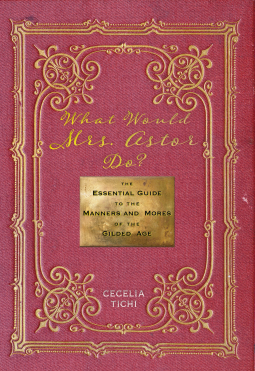
What Would Mrs. Astor Do? by Cecelia Tichi

book cover
What Would Mrs. Astor Do?
by Cecelia Tichi


ISBN-13: 9781479826858
Hardcover: 352 pages
Publisher: NYU Press
Released: Nov. 6, 2018

Source: ebook review copy from the publisher through NetGalley.

Book Description, Modified from NetGalley:
Mark Twain called it the Gilded Age. Between 1870 and 1900, the United States’ population doubled, accompanied by an unparalleled industrial expansion, and an explosion of wealth unlike any the world had ever seen. America was the foremost nation of the world, and New York City was its beating heart. There, the richest and most influential became icons, whose comings and goings were breathlessly reported in the papers of Joseph Pulitzer and William Randolph Hearst.

As the Old Money titans found themselves besieged by a vanguard of New Money interlopers, Mrs. Astor, an Old Money heiress, dictated proper behavior and demeanor, men’s and women’s codes of dress, acceptable patterns of speech and movements of the body, and what and when to eat and drink. An invitation to her annual ball was a golden ticket into the ranks of New York’s upper crust.

This work serves as a guide to manners as well as everything from the perfect table setting to the array of outfits the elite wore at the time. Cecelia Tichi paints a portrait of New York’s social elite, from the schools to which they sent their children, to their lavish mansions and even their reactions to the political and personal scandals of the day.


My Review:
What Would Mrs. Astor Do? talked about upper class society in New York during the 1870 to 1900 period. The author provided brief biographies of the people who set the trends (like Mrs. Astor), quoted people who lived during that period talking about what it was like, quoted etiquette manuals as to proper behavior (for dining, funerals, etc.), and quoted magazine or newspaper articles talking about what the fashionable set wore or did. She also talked about how people reacted to new inventions, like electricity and telephones, or new trends, like eating lobsters or department stores.

Some of the topics covered were: fashionable house furnishing, lady's department stores, where men got their clothing, gentlemen's clubs, lady's clubs, dining out, hat styles, walking canes, cars, horseback riding, sports, bicycles, fashionable color combinations for clothing, what to wear for many different occasions, street etiquette, letter writing, calling cards, what the fashionable ate and drank, theaters, restaurants, Central Park, Newport, the Bowery, sailing, train travel, ocean liners, Wall Street, schools, views on divorce, and funerals.


If you've read this book, what do you think about it? I'd be honored if you wrote your own opinion of the book in the comments.


Tuesday, October 23, 2018

Wanamaker's Temple by Nicole C. Kirk

book cover
Wanamaker's Temple
by Nicole C. Kirk


ISBN-13: 9781479835935
Hardback: 288 pages
Publisher: NYU Press
Released: Oct. 23, 2018

Source: ebook review copy from the publisher through NetGalley.

Book Description, Modified from Goodreads:
How a pioneering merchant blended religion and business to create a unique American shopping experience. Remembered for his store’s extravagant holiday decorations and displays, Wanamaker built one of the largest retailing businesses in the world and helped to define the American retail shopping experience. From the freedom to browse without purchase and the institution of one price for all customers to generous return policies, he helped to implement retailing conventions that continue to define American retail to this day.

Wanamaker was also a leading Christian leader, participating in the major Protestant moral reform movements from his youth until his death in 1922. But most notably, he found ways to bring his religious commitments into the life of his store. He focused on the religious and moral development of his employees, developing training programs and summer camps to build their character, while among his clientele he sought to cultivate a Christian morality through decorum and taste.

Wanamaker’s Temple examines how and why Wanamaker blended business and religion in his Philadelphia store, offering a historical exploration of the relationships between religion, commerce, and urban life in the late nineteenth and early twentieth century and illuminating how they merged in unexpected and public ways.


My Review:
Wanamaker's Temple talked about John Wanamaker's business career, some things that influenced him and he cared about, and the new business practices that he instituted. The author also looked at how Wanamaker changed his business practices to reflect his religious beliefs. In addition to teaching Sunday school and donating money to Protestant causes, he wanted to influence people through his stores. He believed he could lift people up through beautiful architecture, music and religious art on display at his stores, decorating his stores for religious holidays, and educating his young, poor employees who had to work rather than go to school. This education included the basics as well as manners, fitness, and a work ethic. Overall, I'd recommend this interesting look at the time period, though I got the feeling that the author mildly disapproved of Wanamaker.


If you've read this book, what do you think about it? I'd be honored if you wrote your own opinion of the book in the comments.


Tuesday, August 14, 2018

Travels with Foxfire by Foxfire Fund Inc

book cover
Travels with Foxfire
by Foxfire Fund Inc


ISBN-13: 9780525436294
Paperback: 336 pages
Publisher: Anchor Books
Released: Aug. 14, 2018

Source: ebook review copy from the publisher through NetGalley.

Book Description, Modified from Goodreads:
The new volume in the classic, million-copy-selling series celebrates the stories of men and women from across Appalachia. Since 1972, the Foxfire books have brought Appalachia to hundreds of thousands of readers. Travels with Foxfire, the sixteenth book in the series, once again captures the music, the history, and the food (and drink!) of the region, through the stories of men and women from throughout the region. Across more than thirty entries, we discover the secret history of NASCAR (it involves bootleggers), hear from perhaps the world's foremost expert on privies, and uncover old family recipes for Buttermilk Corn Bread, Apple Fritters, barbeque sauce, and more. A rich compendium of the collected wisdom of the artists, craftsmen, musicians, and moonshiners who call Appalachia home, Travels with Foxfire is a joyful celebration of a distinctly American culture.


My Review:
Travels with Foxfire is a collection of interviews with people who live in the Appalachia region. Most of these people were in their 60s or 70s, though some were younger. We're given a short biography of their life plus some stories they shared about a certain topic. The speaker often assumed that the reader was already familiar with what they were talking about. For example, the Southern Gospel performers never really explained what that type of music was, they just debated if its popularity was waning and told some funny stories from their performances. This book is more for people who want to reminisce about "You remember when...?" than for people interested in learning details about how people used to live.

The book included some people with odd hobbies, successful authors (including cookbook authors), hunters, herbal gatherers, artists, singers/writers, and people who had been involved in moonshine production, stock car racing, drive-in movie theaters, and water dowsing. Overall, the stories were interesting and amusing, but I'd hoped for something a bit more informative as well.


If you've read this book, what do you think about it? I'd be honored if you wrote your own opinion of the book in the comments.


Saturday, April 21, 2018

The Light Shines from the West by Robert C. Baron

book cover
The Light Shines from the West
by Robert C. Baron


ISBN-13: 9781682751640
Hardcover: 272 pages
Publisher: Fulcrum Publishing
Released: April 3, 2018

Source: ebook review copy from the publisher through NetGalley.

Book Description, Modified from Goodreads:
An exploration of the innovations and expansions that have shaped the West and the American landscape from 1800 to today, this book shines a light on the people and places integral to the development of our nation. Robert C. Baron has been joined by five others in writing this important book. Contributors include Elizabeth Darby, Page Lambert, Dr. Bruce Paton, Daniel Wildcat, and Donald A. Yale.


My Review:
The Light Shines from the West is a collection of 12 essays written by 6 different people about the development of the American West, from the Louisiana Purchase to present day. The intent was to include information on the people who lived in the West before American Easterners arrived and to look at factors that made living in the West a unique experience. The essays were still basically from the European/Eastern American viewpoint of events and about their migration into the West. Each chapter was on a new topic (though there was some repetition by other authors), and we're only provided with an overview or survey of the topic.

The essays talked about how the land of the West was acquired, what it was physically like, the various deals that have been made with the American Indians up until present day, who settled Canada and Mexico and their expansion and consolidation, a brief history of the development of transportation and communications which allowed more rapid settlement and less isolation in the West, reasons people went West (agriculture, mining, logging, Homestead Act, etc.) and it's economic development, a multi-ethnic look at women's role in the West, what rural life was like, political issues, and more.


If you've read this book, what do you think about it? I'd be honored if you wrote your own opinion of the book in the comments.


Tuesday, October 31, 2017

River Master by Cecil Kuhne

book cover
River Master
by Cecil Kuhne


ISBN-13: 9781682680742
Hardcover: 256 pages
Publisher: Countryman Press
Released: Oct. 31, 2017

Source: ebook review copy from the publisher through NetGalley.

Book Description, Modified from NetGalley:
In 1869, Civil War veteran and amputee Major John Wesley Powell led an expedition down the uncharted Colorado River through the then-nameless Grand Canyon. This is the story of what started as a geological survey, but ended in danger, chaos, and blood.

The men were inexperienced and ill-equipped, and they faced unimaginable peril. Along the way there was death, mutiny, and abject terror, but Powell persevered and produced a masterwork of adventure writing still held in the highest regard by the boatmen who follow his course today.

With never-before-used primary sources and firsthand experience navigating Powell’s legendary route, Cecil Kuhne brings this remarkable chapter of frontier history to life.


My Review:
River Master describes the 97-day 1869 Powell expedition down the uncharted Colorado River. They went into the unknown with the intent to map and do a geological survey of the Colorado River. These ten men had never been on a river, let alone handled whitewater. Their boats were less than ideal for this trip. Yet not a single one drowned, despite many dangerous mishaps.

The author quoted from or summarized the information in the journals written by the men during the trip and records of later interviews with them about the trip. He describe what the trip was like, including the friction caused by running out of food, the danger, and personality conflicts. He also talked about James White's earlier trip on the Colorado River and some later expeditions, including one in 18871/72 led by Major Powell. He talked about Powell's official report, which was written like a journal but was much more colorful than the terse entries made during the actual trip.

The intent of this book was to accurately portray what happened on the trip, so the description was interesting and exciting but didn't include the questionable stories from the later official report. While I enjoyed this amazing story, I think whitewater rafters could better appreciate just what these men went through since much of what was recorded talked about the rapids they encountered. Overall, I'd recommend this book.


If you've read this book, what do you think about it? I'd be honored if you wrote your own opinion of the book in the comments.


Excerpt: Read an excerpt using Google Preview.

Wednesday, September 20, 2017

The World of Laura Ingalls Wilder by Marta McDowell

book cover
The World of Laura Ingalls Wilder
by Marta McDowell


ISBN-13: 9781604697278
Hardcover: 390 pages
Publisher: Timber Press
Released: Sept. 20, 2017

Source: ebook review copy from the publisher through NetGalley.

Book Description, Modified from NetGalley:
A must-read companion to the Little House books. 2017 is the 150th anniversary of Laura Ingalls Wilder’s birthday. Her beloved Little House series tells a classic coming-of-age story based on Wilder’s own family life and is a reflection of the pioneer spirit of the time. They are also deeply rooted in the natural world. The plants, animals, and landscapes are so integral to the stories, they are practically their own characters.

The World of Laura Ingalls Wilder, by New York Times bestselling author Marta McDowell, explores Wilder’s deep relationship to the landscape. Follow the wagon trail of the series, starting in the Wisconsin setting of Little House in the Big Woods to the Dakotas and finally to Missouri. Throughout, you’ll learn details about Wilder’s life and inspirations, discover how to visit the real places today, and even learn to grow the plants and vegetables featured in the stories.

The artful package includes original illustrations by Helen Sewell and Garth Williams, along with historical and contemporary photographs.


My Review:
The World of Laura Ingalls Wilder is a companion book to the Little House books. We're told the locations and dates for each book in the series. Going book by book, the author explained things like the history of each location and what was typical for the area at that time. She also gave more detail on the plants and farm work mentioned in the books. There were many pictures and illustrations of the places, tools, and plants. She included maps showing the locations where Laura lived.

Basically, each chapter was a companion to a book or location in the series: Wisconsin Woods (Little House in the Big Woods), New York Farm (Farmer Boy), Prairie of Kansas (Little House on the Prairie), Creekside in Minnesota & Iowa (On the Banks of Plum Creek), The Dakota Prairie (By the Shores of Silver Lake and The Long Winter), Settled Farm & Settled Town (Little Town on the Prairie and These Happy Golden Years), and Great Plains to Ozark Ridge (The First Four Years). The author also covered Laura's life at Rocky Ridge Farm and Rock Home (based on letters, newspapers, and other writings).

She ended by describing the places that a person might enjoy visiting if interested in seeing the places where Laura Wilder lived. She also included a list of plants mentioned in the books for those interested in planting those flowers, trees, etc. The book was a fun, quick read. Overall, I'd recommend this interesting book to fans of the Little House series.


If you've read this book, what do you think about it? I'd be honored if you wrote your own opinion of the book in the comments.


Excerpt: Read an excerpt using Google Preview.
Tuesday, August 22, 2017

Ladies of the Ticker by George Robb

book cover
Ladies of the Ticker:
Women and Wall Street from the Gilded Age to the Great Depression
by George Robb


ISBN-13: 9780252082719
Paperback: 280 pages
Publisher: University of Illinois Press
Released: Aug. 15, 2017

Source: ebook review copy from the publisher through NetGalley.

Book Description, Modified from Goodreads:
Long overlooked in histories of finance, women played an essential role in areas such as banking and the stock market during the late nineteenth and early twentieth centuries. Yet their presence sparked ongoing controversy. Hetty Green's golden touch brought her millions, but she outraged critics with her rejection of domesticity. Progressives like Victoria Woodhull, meanwhile, saw financial acumen as more important for women than the vote.

George Robb's pioneering study sheds a light on the financial methods, accomplishments, and careers of three generations of women. Plumbing sources from stock brokers' ledgers to media coverage, Robb reveals the many ways women invested their capital while exploring their differing sources of information, approaches to finance, interactions with markets, and levels of expertise.

He also rediscovers the forgotten women bankers, brokers, and speculators who blazed new trails--and sparked public outcries over women's unsuitability for the predatory rough-and-tumble of market capitalism. Entertaining and vivid with details, Ladies of the Ticker sheds light on the trailblazers who transformed Wall Street into a place for women's work.


My Review:
Ladies of the Ticker is a history of women involved in the American stock market from around the 1880s to 1920s. The author started by describing the laws (in England and America) that made it difficult for women to control and invest their own money and the changes that came about in the late 1800s that allowed more women to invest in stocks and bonds.

The rest of the book focused "the Gilded Age to the Great Depression." He started by describing how novels, magazines, financial manuals, and similar sources portrayed the stock market and women who invested in bonds or stocks. He then looked at records from two stock brokers showing what women actually invested their money in, their investment habits, and how they acted in their correspondence with the stock broker. He acknowledged that women didn't all behave the same way, yet there were certain general trends. He contrasted women's investment behavior to the records of men's investments and to how popular culture portrayed women investors.

The author also talked about fraud (involving banks, stocks, and bonds) that was directed at women or that was done by women. He looked at the women's rights movement and how they promoted financial education and empowerment for women. He talked about early women brokers, capitalists, and financiers. Some parts read like biographies. We're told about several women who tried to set up as a stock brokers, what the press and such said about the woman, what she said about her past, and what we know about what happened to her. We also learned details about several women who carried out sensational financial frauds.

This book had an academic tone. As in, I felt like the topic had been carefully researched and a balanced view presented. As a woman who is interested in this time period and who invests in stocks, I found it very interesting. Overall, I'd recommend this book.


If you've read this book, what do you think about it? I'd be honored if you wrote your own opinion of the book in the comments.


Thursday, July 20, 2017

Simply Electrifying by Craig R. Roach

book cover
Simply Electrifying
by Craig R. Roach


ISBN-13: 9781944648268
Hardcover: 400 pages
Publisher: BenBella Books
Released: July 25, 2017

Source: ebook review copy from the publisher through NetGalley.

Book Description, Modified from Goodreads:
Electricity is at the core of all modern life. It has transformed our society more than any other technology. Yet, no book offers a comprehensive history about this technological marvel. Until now.

This book brings to life the 250-year history of electricity through the stories of the men and women who used it to transform our world: Benjamin Franklin, James Watt, Michael Faraday, Samuel F.B. Morse, Thomas Edison, Samuel Insull, Albert Einstein, Rachel Carson, Elon Musk, and more. In the process, it reveals for the first time the complete, thrilling, and often-dangerous story of electricity’s historic discovery, development, and worldwide application.

Written by electricity expert and four-decade veteran of the industry Craig R. Roach, Simply Electrifying marshals, in fascinating narrative detail, the full range of factors that shaped the electricity business over time—science, technology, law, politics, government regulation, economics, business strategy, and culture—before looking forward toward the exhilarating prospects for electricity generation and use that will shape our future.


My Review:
Simply Electrifying is a history of electricity for the average person. Anything technical regarding an invention, experiment, or scientific idea was explained in simple terms. It was mostly a collection of biographies of people who made a major impact on the history of electricity and how we use it. The author also talked about how politics, technology choices, and economics have impacted how we use electricity. I'd recommend this book to those who'd watch a documentary on the topic, as it had a similar feel.

He covered Benjamin Franklin (how the Leyden Jar worked, lightening experiments), James Watt (invented improved steam engine, which was used for electrical generation), Michael Faraday (link between magnetism and electricity, invented electric motor, electric generator), James Maxwell (electromagnetic waves), Samuel Morse (telegraph) and the transatlantic cable.

Thomas Edison (inventions needed for an electricity industry, like electric light bulbs, wall switches, power lines, generators), George Westinghouse and Nikola Tesla (AC/DC current wars, AC electric motor, Tesla coil), Samuel Insull (economy of scale to lower pricing and make electricity affordable).

FDR's New Deal for electricity (more hydro power and proposed government action and regulation), the building of Hoover Dam, the Tennessee Valley Authority and David Lilienthal (public versus private utilities), coal mining and use and John L. Lewis (labor strikes), Albert Einsten, nuclear weapons and nuclear power plants, the modern environmental movement, California's electricity crisis and competitive reform, President Obama's Clean Power Plan, climate change, George Mitchell's shale gas revolution (fracking and natural gas usage), and Elon Musk's vision for the future of electricity set against the lessons learned from history.


If you've read this book, what do you think about it? I'd be honored if you wrote your own opinion of the book in the comments.


Excerpt: Read an excerpt using Google Preview.

Monday, July 3, 2017

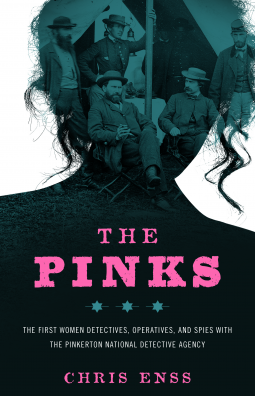
The Pinks by Chris Enss

book cover
The Pinks
by Chris Enss


ISBN-13: 9781493008339
Paperback: 208 pages
Publisher: Two Dot Books
Released: July 1, 2017

Source: ebook review copy from the publisher through NetGalley.

Book Description, Modified from NetGalley:
Most students of the Old West and American law enforcement history know the story of the notorious and ruthless Pinkerton Detective Agency and the legends behind their role in establishing the Secret Service and tangling with Old West Outlaws.

But the story of Kate Warne, an operative of the Pinkerton Agency and the first woman detective in America, and the stories of other women who served their country are not as well known. From Kate Warne’s part in saving the life of Abraham Lincoln in 1861 to the lives and careers of the other women who spied during the Civil War, these true stories add another dimension to our understanding of American history. Their stories are richly illustrated throughout with numerous historical photographs.


My Review:
The Pinks is a collection of true crime and spy stories and some biographies. The author talked about several of Kate Warne's cases and about various other women who worked as spies during the Civil War. We're told a little about Pinkerton, his detective agency, and how he hired Kate Warne in 1861. We get details about a couple cases that Kate helped solve (before and after the war). These cases were interesting, especially as the Pinkerton team was hired more to gain confessions than gather clues.

But most of the chapters talked about spying just before and during the Civil War. Kate Warne, Hettie Lawton, Vinne Ream, Elizabeth Baker, Mary Touvestre, Elizabeth Van Lew, and Dr. Mary Edwards Walker were all involved in spying for the Union during the war. I don't think that they all worked for the Pinkerton Detective Agency, though.

Some of the chapters described details about what the woman did and discovered, but some missions were covered only in general terms. The chapter on Dr. Walker focused more on her ambitions and what happened after the war than on what she did as a spy. One chapter was more about submarines and the battles involving the Merrimack and the Monitor than about the women who passed on information about the submarines.

I'd expected more details about Kate Warne's life or a focus on the detective cases involving the first female Pinkerton operatives. Though the book focused more on spying and gave only a brief look at these women, it was interesting to learn some of the things these women did.


If you've read this book, what do you think about it? I'd be honored if you wrote your own opinion of the book in the comments.


Excerpt: Read an excerpt using Google Preview.

Monday, November 21, 2016

The Defender by Ethan Michaeli

book cover
The Defender
by Ethan Michaeli


ISBN-13: 9780547560694
Hardcover: 656 pages
Publisher: Houghton Mifflin Harcourt
Released: Jan. 12, 2016

Source: ARC review copy from the publisher through Amazon Vine.

Book Description, Modified from Back Cover:
Giving voice to the voiceless, the Chicago Defender condemned Jim Crow, catalyzed the Great Migration, and focused the electoral power of black America. Robert S. Abbott founded The Defender in 1905, smuggled hundreds of thousands of copies into the most isolated communities in the segregated South, and was dubbed a "Modern Moses," becoming one of the first black millionaires in the process.

His successor wielded the newspaper’s clout to elect mayors and presidents, including Harry S. Truman and John F. Kennedy, who would have lost in 1960 if not for The Defender’s support. Along the way, its pages were filled with columns by legends like Ida B. Wells, Langston Hughes, and Martin Luther King.

Drawing on dozens of interviews and extensive archival research, Ethan Michaeli constructs a revelatory narrative of race in America and brings to life the reporters who braved lynch mobs and policemen’s clubs to do their jobs.


My Review:
The Defender is American history covering the 1900s with a focus on issues affecting the black population. It mainly covered 1905 to 1983, with a brief look at events leading up to the founding of the paper and of events after 1983 until the paper closed. We're told details about The Defender and the people working there. However, mainly it's a history of Chicago and America.

While it's a thick book, the author did a good job of making it interesting and easy to read. For example, I care nothing for boxing, yet I got tense reading about the boxing matches because the author managed to capture the excitement and tension of the time and transmit it to me. We're told about major events that were covered by The Defender, often with information about what the white papers or other black-run papers said about the events. I felt like I was given a fair view of events and was allowed to come to my own conclusions rather than being told what to think or getting only one side. I really appreciate history books like this one.

When I was in high school, we totally skipped the 1900s. Even the college-level "Modern History" class focused mainly on the wars and politics. I wish I'd read this book as a high school student. I've long wondered about some of the things that this book covered and was totally ignorant of others. It gave important insights into why America is the way it is today. Obviously, I'd highly recommend this very informative book. (I'm a white gal, but this is a book for everyone.)


If you've read this book, what do you think about it? I'd be honored if you wrote your own opinion of the book in the comments.


Excerpt: Read an excerpt using Google Preview.

Monday, November 14, 2016

In Pursuit of Privilege by Clifton Hood

book cover
In Pursuit of Privilege
by Clifton Hood


ISBN-13: 9780231172165
Hardcover: 512 pages
Publisher: Columbia University Press
Released: Nov. 1, 2016

Source: ebook review copy from the publisher through NetGalley.

Book Description, Modified from Amazon:
A history that extends from the 1750s to the present, In Pursuit of Privilege recounts upper-class New Yorkers' struggle to create a distinct world guarded against outsiders, even as economic growth and democratic opportunity enabled aspirants to gain entrance. Despite their efforts, New York City's upper class has been drawn into the larger story of the city both through class conflict and through their role in building New York's cultural and economic foundations.

Clifton Hood merges a history of the New York economy in the eighteenth century with the story of Wall Street's emergence as an international financial center in the late nineteenth and early twentieth centuries, as well as the dominance of New York's financial and service sectors in the 1980s. Bringing together several decades of upheaval and change, he shows that New York's upper class did not rise exclusively from the Gilded Age but rather from a relentless pursuit of privilege, affecting not just the urban elite but the city's entire cultural, economic, and political fabric.


My Review:
In Pursuit of Privilege is a collection of essays about the New York City upper class covering 1750 to modern times. The author focused on seven time periods where major events created changes in the upper class, though he also talked about what happened between those times. Those time periods were: 1750s/1760s (changed by the 7 Years War), 1780s/1790s (by the Revolutionary War), 1820s (by major growth in NYC), 1860s (by the Civil War), 1880s/1890s (Gilded Age), 1940s (by WWII), and 1970s (by a financial crisis).

Different topics were covered under the different time periods, but each covered what defined the upper class (lineage, wealth, etc.), what they valued (manners, wealth, power, etc.), and how they interacted. The author also described things like where they built their houses, their social diversions (like clubs), what role or social responsibilities they felt regarding the common people, what they desired in schools for their children, how they spent their wealth, and the development of the NY Stock Exchange. He also briefly compared the NYC upper class's values and behavior to those of the upper class in other major cities.

The tone of the writing was distant, looking back at events with hindsight and clinically dissecting each topic. While some specific people were named, they're used as a brief example to make a point. As in, it's not a popular history that puts you in the time, focuses on specific people, or shows their behavior in context. While the tone was academic, the writing wasn't dry and I found the topics interesting. I'd recommend this book to readers interested in the changes that have occurred in the upper class of NYC.


If you've read this book, what do you think about it? I'd be honored if you wrote your own opinion of the book in the comments.


Monday, November 7, 2016

Iron Dawn by Richard Snow

book cover
Iron Dawn:
The Monitor, the Merrimack, and the Civil War Sea Battle that Changed History
by Richard Snow


ISBN-13: 9781476794181
Hardcover: 384 pages
Publisher: Scribner
Released: Nov. 1, 2016

Source: ebook review copy from the publisher through NetGalley.

Book Description, Modified from Back Cover:
No single sea battle has had more far-reaching consequences than the one fought in the harbor at Hampton Roads, Virginia, in March 1862. The Confederacy, with no fleet of its own, built an iron fort containing ten heavy guns on the hull of a captured Union frigate named the Merrimack. The North got word of the project when it was already well along, and, in desperation, commissioned an eccentric inventor named John Ericsson to build the Monitor, an entirely revolutionary iron warship—at the time, the single most complicated machine ever made. Rushed through to completion in just 100 days, it mounted only two guns, but they were housed in a shot-proof revolving turret.

The Monitor fought the Merrimack to a standstill and saved the Union cause. As soon as word of the battle spread, Great Britain—the foremost sea power of the day—ceased work on all wooden ships. A thousand-year-old tradition ended, and the path to the naval future opened.

Richly illustrated with photos, maps, and engravings, Iron Dawn is the irresistible story of these incredible, intimidating war machines. Historian Richard Snow brings to vivid life the tensions of the time, describing the building, battles, and impact of the Merrimack and Monitor.


My Review:
Iron Dawn describes the origin, building, and careers of the Merrimack and the Monitor. The author set the scene for the building of these ships through a series of short biographies of the top people involved.

Apparently, not a lot of information has survived that describes the Merrimack (as an iron side ship) and that information isn't very clear. So we mainly learned about the logistics of making her rather than details about how she actually worked. In contrast, the author provided some good descriptions of the Monitor, from how her engines worked to how she stayed watertight. Much of this information was provided through descriptions that people gave at the time as recorded in letters, journals, newspapers, etc.

Once the Merrimack and Monitor were built, we followed their careers with much time spent on the famous fight between the two. This battle was vividly retold as the author quoted descriptions given by people who served on the two ships. The descriptions were gory since the Merrimack had a devastating effect on the wooden ships it attacked before the Monitor arrived.

The author described the fate of the ships after that battle and gave an idea of what serving on them was like. He also talked about the modifications that were made to the Monitor design in future monitor-class ships and how other nations reacted to the new ships.

There were pictures of the people involved, some diagrams and such for the Monitor, and a picture of what the Merrimack may have looked like. The book was very readable, and the battles were exciting even knowing the ultimate outcomes. The Monitor's design and construction was quite remarkable. I'd recommend this book to those interested in naval history, the Civil War, or how we went from wood to iron warships.


If you've read this book, what do you think about it? I'd be honored if you wrote your own opinion of the book in the comments.


Excerpt: Read an excerpt using Google Preview.

Tuesday, October 4, 2016

America the Ingenious by Kevin Baker

book cover
America the Ingenious:
76 World-Changing Inventions and the Visionaries Who Made Them Happen
by Kevin Baker


ISBN-13: 9781579656942
Hardcover: 276 pages
Publisher: Artisan Books
Released: Oct. 4, 2016

Source: ebook review copy from the publisher through NetGalley.

Book Description, Modified from NetGalley:
Here are 76 of the most intriguing, important, and ingenious inventions realized in America, from the Panama Canal, the Hoover Dam, the Golden Gate Bridge, and Frank Lloyd Wright's Fallingwater to the oil rig, the electric sewing machine, and the telephone. Who came up with these ideas? How long did they take to realize? What were the complications? This book will satisfy the curiosity of history and miscellany buffs alike.


My Review:
America the Ingenious explores 76 important or interesting American inventions. From covered wagons (prairie schooner) to cars (Lincoln zephyr), planes (transcontinental plane), trains (NY subway, transcontinental railroad, etc.), ships (yankee clippers, container ship), and spaceships (Apollo 11). From canals (Erie Canal, Panama Canal) to tunnels (Hudson and East River tunnels). From the rotary printing press to transatlantic cable, microprocessor to 3D printing, sewing machines to athletic shoes, and more.

Each invention had about 3 pages of text plus an illustration or two. The author talked about why the invention was built and the people and efforts involved. He provided interesting details about the challenges faced during the building of the project or by those using the product. He usually discussed how it worked only in general terms. Overall, I'd recommend this book.


If you've read this book, what do you think about it? I'd be honored if you wrote your own opinion of the book in the comments.


Friday, June 3, 2016

Indian Boyhood by Charles Eastman

book cover
Indian Boyhood
by Charles Eastman


ISBN-13: 978-1-937786-56-45
Hardback: 40 pages
Publisher: Wisdom Tales
Released: 1902; June 7, 2016

Source: Review copy from the publisher.

Book Description, Modified from Publisher website:
Imagine a childhood where riding horses, playing in the woods, and hunting for food was part of everyday life; where a grizzly bear, a raccoon, or a squirrel was your favorite pet. But imagine, too, being an orphan at the age of six, being forced off your land by U.S. soldiers, and often going hungry. Such was the childhood of the first great American Indian author, Charles Eastman, or Ohiyesa (1858-1939).

Carefully edited for a younger audience by multiple award-winning author and editor, Michael Oren Fitzgerald, Indian Boyhood recalls Eastman’s earliest childhood memories. He was born in a buffalo hide tipi in western Minnesota, and raised in the traditional Dakota Sioux manner until he was fifteen years old. He was then transplanted into the “white man’s” world. Educated at Dartmouth College, he went on to become a medical doctor, renowned author, field secretary for the YMCA, and a spokesman for American Indians.


My Review:
Indian Boyhood is a picture book for ages 4 and up and it's an edited version of Charles Eastman's autobiography about his Dakota Sioux upbringing. Charles Eastman, or Ohiyesa, lived from (1858-1939) and wrote eleven books from 1902-1918. This book tells how he was raised by a grandmother due to losing his parents while very young and how they were forced off their land, but also about his wild-animal pets, hunting, and learning to be a warrior.

The illustrations complement the text by showing details of Indian life that aren't specifically mentioned in his narrative. Information about these extra details is included at the end of the book. The illustrations are done in the same style as that shown on the cover. All royalties are donated to various American Indian causes. I'd recommend this book to children interested in what a Dakota Indian childhood was like in 1858-1873.


If you've read this book, what do you think about it? I'd be honored if you wrote your own opinion of the book in the comments.


Excerpt: See more on the publisher's website.
book cover

Monday, May 2, 2016

Neither Snow nor Rain by Devin Leonard

book cover
Neither Snow nor Rain
by Devin Leonard


ISBN-13: 9780802124586
Hardcover: 288 pages
Publisher: Grove Press
Released: May 3,2016

Source: ebook review copy from the publisher through NetGalley.

Book Description, Modified from Back Cover:
The United States Postal Service is far more efficient than any other mail service—more than twice as efficient as the Japanese and easily outpacing the Germans and British. Journalist Devin Leonard tackles the fascinating, centuries-long history of the USPS.

Founded by Benjamin Franklin, it was the information network that bound far-flung Americans together, fostered a common culture, and helped American business to prosper. Under Andrew Jackson, the post office was molded into a vast patronage machine, and by the 1870s, over seventy percent of federal employees were postal workers.

As the country boomed, USPS aggressively developed new technology, from mobile post offices on railroads and air mail service to mechanical sorting machines and optical character readers. A first class stamp remains one of the greatest bargains of all time, and yet, the USPS is slowly vanishing.


My Review:
Neither Snow nor Rain is the history of the U.S. Postal Service as seen through the frustrations and controversies faced by the postmaster generals. The book started around 1737 with Ben Franklin and the colonial system of mail delivery. We're given a short biography for each new postmaster general and descriptions of the frustrations they faced. We learned about how the postal service worked (in terms of sorting, transport, etc.) only if it related to a postmaster general's attempt to update the system or if it sparked a controversy.

So we learn about early delivery competitors and the USPS's attempts to shut them down, about censorship, about the patronage system and the rising influence of the unions. We're told about modernization efforts that were rejected by congress or fought against by the union. We also learned about mail trains and air mail, home delivery, zip codes, and stamp collecting.

Since the author focused on controversy, he often focused on what the minority were saying. I sometimes felt like we didn't get a balanced view of what people at the time felt about certain topics. However, this book was interesting.


If you've read this book, what do you think about it? I'd be honored if you wrote your own opinion of the book in the comments.


Wednesday, March 2, 2016

President Lincoln by Demi

book cover
President Lincoln:
by Demi


ISBN-13: 9781937786502
Hardcover: 32 pages
Publisher: Wisdom Tales
Released: Feb. 7, 2016

Source: Review copy from the publisher.

Book Description, Modified from Goodreads:
From a small log cabin in Kentucky to the steps of the White House, Abraham Lincoln rose from humble beginnings to the very height of prominence and prestige. Leading America through the momentous events of the Civil War, the Emancipation Proclamation, and the abolition of slavery, the story of "Honest Abe" is one that all children should know.

Now award-winning author and illustrator, Demi, recounts Lincoln s incredible life story of courage, wisdom, and compassion as only she can. Filled with stunning illustrations, this book contains an appendix of fascinating facts and famous quotes from Lincoln s life, as well as a timeline and map.


My Review:
President Lincoln is a biography about Lincoln for ages 4 and up. The main part of the book contained quotes from Lincoln along with details about his life. The author described some of what life was like in Lincoln's childhood and told about important events from his life. At the end of the book, the author included the Gettysburg Address, a timeline of Lincoln's life, and a collection of quotes from and facts about Lincoln.

The cover art gives you some idea of what the interior art looks like. The people, animals, and objects looked flat, like paper cut-out dolls. There were no shadows, so the figures appear stuck on to the backgrounds. I didn't really care for the illustrations, but they may appeal to others.

If you're looking for a biography about Lincoln suitable for young children, this book did a good job of describing the highlights of his life.


If you've read this book, what do you think about it? I'd be honored if you wrote your own opinion of the book in the comments.


Excerpt:
book interior
book interior

Wednesday, January 13, 2016

Women in Black History by Tricia Williams Jackson

book cover
Women in Black History
by Tricia Williams Jackson


ISBN-13: 9780800726522
Paperback: 176 pages
Publisher: Revell
Released: Jan. 5, 2016

Source: ebook review copy from the publisher through NetGalley.

Book Description, Modified from Goodreads:
Within the pages of American history are the stories of remarkable African American women who have defied the odds, taken a stand for justice, and made incredible strides despite opposition from the culture around them. Now young readers can discover their exciting true stories in this eye-opening collection.

From well-known figures like Sojourner Truth, Harriet Tubman, and Rosa Parks to women rarely found in any history book, "Women in Black History" explores the lives of writers, athletes, singers, activists, and educators who have made an indelible mark on our country and our culture. Perfect for kids, but also for adults who like to read about important figures and unsung heroes.


My Review:
Women in Black History is a collection of 14 biographies of American women who made an impact on our history. It's targeted at children, and the author explained words like "debut" and "suffrage" when she used them. Adults will also enjoy this book.

The biographies covered a period from 1753 to 1994. Some of these women were slaves and others free, but they were honored for their work as poets, singers, writers, in sports, for anti-slavery activities, and their efforts for civil rights, woman's suffrage, and equal education.

Each biography was about 12 pages long. It started with a scene from the woman's life, then the author told about their life. She briefly mentioned how each woman's Christian faith affected their actions. At the end of each biography, the author included three reading comprehension questions, then she invited the reader to imagine something relating to the story and to get creative with a related activity. There was a sketch or photograph of each woman in the back.

I can see this book being used in homeschooling. I'd recommend it to anyone interested in short biographies of inspiring women.

The women covered were: Phillis Wheatley, Sojourner Truth, Harriet Tubman, Mary Ann Shadd Cary, Frances Ellen Watkins Harper, Anna Julia Cooper, Mary McLeod Bethune, Marian Anderson, Mahalia Jackson, Rosa Parks, Fannie Lou Hamer, Althea Gibson, Coretta Scott King, and Wilma Rudolph.


If you've read this book, what do you think about it? I'd be honored if you wrote your own opinion of the book in the comments.


Excerpt: Read an excerpt using Google Preview.