Showing posts with label women. Show all posts

Monday, June 30, 2025

A History of Women's Work by Janet Few

Book cover
A History of Women's Work
by Janet Few


ISBN-13: 9781036105266
Hardcover: 178 pages
Publisher: Pen and Sword History
Released: July 30, 2025

Source: ebook review copy from the publisher through NetGalley.

Book Description, Modified from Goodreads:
A History of Women's Work explores the often overlooked contributions of women throughout history, particularly in a patriarchal society where men have dominated the historical record. While men were more likely to leave traces – through wills, leases, and civic duties – women laboured behind the scenes, performing crucial yet unpaid tasks for their families and communities. In many households, women supported their husbands’ work, ran home-based industries, or sought paid employment despite societal restrictions.

This book delves into three main areas of women’s work: household tasks, home industries, and paid employment outside the home. Through case studies and practical research tips, it sheds light on the lives of these women, encouraging readers to uncover their own female ancestors' stories and contribute to a richer understanding of women’s history.


My Review:
A History of Women's Work is nonfiction about the different types of work that women did (primarily focused on England) up until the World Wars. The author covered keeping up the household to paid work that could be done at home to helping her husband or paid employment outside the home. The information was written in a very readable fashion, so even teens might find this interesting.

The author covered a variety of jobs, describing each one with some detail on how it was done, explaining how it changed over time, and sometimes using a real woman's example (as found in historical records) to show how the work affected their lives. Sometimes she pointed out a registry that you could go to if you're searching for details about your ancestors who did that job. She covered: making clothing, munitions work, domestic servants, straw plaiting, making matches, fishwives and herring packers, prostitution, housewives using herbal remedies, healing professions, cooking, glove making, dairy work, cleaning, laundry, lacemaking, midwifery, shop work, farm work during the World Wars, textile mills, button making, woman's suffrage, teaching, and pottery work. Overall, I'd recommend this interesting, informative nonfiction.


If you've read this book, what do you think about it? I'd be honored if you wrote your own opinion of the book in the comments.


Thursday, January 2, 2025

The Cure for Women by Lydia Reeder

Book cover
The Cure for Women
by Lydia Reeder


ISBN-13: 9781250284457
Hardcover: 336 pages
Publisher: St. Martin's Press
Released: December 3, 2024

Source: ebook review copy from the publisher through NetGalley.

Book Description, Modified from Goodreads:
After Elizabeth Blackwell became the first woman to graduate from medical school, more women demanded a chance to study medicine. Barred entrance to universities like Harvard, women built their own first-rate medical schools and hospitals. Their success spurred a chilling backlash from elite, white male physicians who were obsessed with eugenics and the propagation of the white race. Distorting Darwin’s evolution theory, these haughty physicians proclaimed in bestselling books that women should never be allowed to attend college or enter a profession because their menstrual cycles made them perpetually sick. Motherhood was their constitution and duty.

Into the midst of this turmoil marched tiny, dynamic Mary Putnam Jacobi, daughter of New York publisher George Palmer Putnam and the first woman to be accepted into the world-renowned Sorbonne medical school in Paris. As one of the best-educated doctors in the world, she returned to New York for the fight to prove the opposition wrong. Aided by other prominent women physicians and suffragists, Jacobi conducted the first-ever data-backed, scientific research on women's reproductive biology. The results of her studies shook the foundations of medical science and higher education. Full of larger than life characters and cinematically written, The Cure for Women documents the birth of a sexist science still haunting us today as the fight for control of women’s bodies and lives continues.


My Review:
The Cure for Women is about the first women doctors in America, the men who opposed them, and the fight for women to be accepted at male medical schools. It's more about what the author felt about the various people and events than quotes of what the women themselves said. The information about Mary Putnam Jacobi only took up about a third of the book. The book started by telling about the Blackwell sisters and a couple of other prominent women doctors, then we got into Mary's life. But the author tended to digress and give biographies and backstories for anyone new introduced into the story. For example, there's a chapter detailing a male doctor's 'rest cure' for women which also told details about several woman who took his cure, one dying afterward and the others finally breaking free of all male restraints to live healthy lives.

I hadn't expected so many biographies beyond Mary's and felt like they slowed the pacing and sometimes didn't even have to do with Mary's interesting story. Also, the author portrayed men as controlling, manipulative, childishly hateful, and basically willing to torture and subjugate women to achieve their own goals. She's convinced me that some of the main male opponents were pretty horrible people, but the supportive men were barely mentioned.

As Mary apparently published a lot of her research, and a number of the women doctors were the first to do things that other schools and hospitals later picked up, I'd expected more of a focus on what they accomplished. I was fascinated by Mary's innovative research showing that the menstrual cycle did not indicate that a woman was 'in heat' nor was it a sign of reoccurring weakness. Instead, this book was written as an epic battle between clever, independent women and white supremist males determined to force women back into a role of baby-making machines.


If you've read this book, what do you think about it? I'd be honored if you wrote your own opinion of the book in the comments.


Thursday, December 5, 2024

The Mysterious Case of the Victorian Female Detective by Sara Lodge

Book cover
The Mysterious Case of the Victorian Female Detective
by Sara Lodge


ISBN-13: 9780300277883
Hardcover: 384 pages
Publisher: Yale University Press
Released: November 5, 2024

Source: ebook review copy from the publisher through NetGalley.

Book Description from Goodreads:
From Wilkie Collins to the adventures of Sherlock Holmes, the traditional image of the Victorian detective is male. Few people realise that women detectives successfully investigated Victorian Britain, working both with the police and for private agencies, which they sometimes managed themselves.

Sara Lodge recovers these forgotten women’s lives. She also reveals the sensational role played by the fantasy female detective in Victorian melodrama and popular fiction, enthralling a public who relished the spectacle of a cross-dressing, fist-swinging heroine who got the better of love rats, burglars, and murderers alike.

How did the morally ambiguous work of real women detectives, sometimes paid to betray their fellow women, compare with the exploits of their fictional counterparts, who always save the day? Lodge’s book takes us into the murky underworld of Victorian society on both sides of the Atlantic, revealing the female detective as both an unacknowledged labourer and a feminist icon.


My Review:
The Mysterious Case of the Victorian Female Detective looks at both real and fictional female detectives in Victorian Britain. The author looked at specific examples of the female detective in fiction (both writing and theater) and commented on how these women reflected on the time period they were written in and how they were a commentary on their times, too. The author also examined real life examples of women who solved crimes or worked for private inquiry agencies or the official police force and how the reality contrasted with the fictional depictions.

While the book covered some details about the type of work these women really did, a lot of the book (especially near the end) was more commentary on the social context. This was interesting, but I was hoping for more information on what they really did--which, apparently, was often obscured by a tendency to glamorize the job to fit the fictional action heroine stereotype. Overall, I'd recommend this book to those who want to know more about women detectives in the mid- to late-1800s in Britain.


Saturday, September 10, 2022

Victorian Fashions for Women by Fiona Kay, Neil R Storey

Book cover
Victorian Fashions for Women
by Fiona Kay, Neil R Storey


ISBN-13: 9781399004169
Hardcover: 248 pages
Publisher: Pen & Sword History
Released: Aug. 9, 2022

Source: ebook review copy from the publisher through NetGalley.

Book Description, Modified from Goodreads:
Victorian Fashions for Women explores the British styles and clothing throughout the long reign of Queen Victoria, from the late 1830s to the first years of the 20th century. Within are a superb overview of the dresses, hats, hair styles, corsetry, undergarments shoes and boots that combined to present the prevailing styles for each decade. From those who had enough money to have day and evening wear and clothes for sports and outdoor activities, to those with limited income and wardrobes or labouring folk with little more than the clothes they stood up in.

All decades are illustrated with original photographs, adverts and contemporary magazine features from the authors' own remarkable collections, accompanied by a knowledgeable and informative text that describes the fashions, their social history context and influences reflected in the clothes of the time. Laid out in a clear and easy-to-follow chronological order, the key features of styles, decoration and accoutrements will help family historians to date family photographs and will provide a useful resource for students and costume historians or for anyone with a love of fashion and style to enjoy.


My Review:
Victorian Fashions for Women describes the changing fashions in women's clothing in England from 1840 to 1900. It's actually throughout Queen Victoria's reign, but the authors took each decade at a time so it ended up titled as "The 1840s Look" and so on. The authors described what fashionable women were wearing and used some quotes from fashion magazines, newspapers reporting on what the royals wore, and even ads. I'd hoped for a lot of pictures or illustrations, but it was basically a lot of technical terms (fabric names, sewing and clothing terms) that I sometimes found hard to follow as I didn't know what many of the terms meant. Only afterward, I discovered a glossary of terms at the back, though even that wasn't as helpful as I'd hoped.

Anyway, the authors focused on changes over time to the overall look, the sleeves, waist, where the bulk of the skirt went, trimmings, the underclothing used to get the right look, outerwear (hats, cloaks, etc.), and trends in jewelry. They also talked about how changes in technology (like new dyes) changed fashions. In the last chapter, the authors covered things like prison warden uniforms and mourning attire. This book is helpful if you mainly want to know what fashion trends were popular at a certain time (big skirts, big sleeves, etc.) but it's less helpful if you want a visual guide or a non-technical description of real dresses in real situations rather than the suggested high fashions.


If you've read this book, what do you think about it? I'd be honored if you wrote your own opinion of the book in the comments.


Friday, June 18, 2021

Perimenopause Power by Maisie Hill

Book cover
Perimenopause Power
by Maisie Hill


ISBN-13: 9781472978875
Paperback: 336 pages
Publisher: Green Tree
Released: May 4th 2021

Source: ebook review copy from the publisher through NetGalley.

Book Description, Modified from Goodreads:
Empowering guide to menopause that all women need, packed with advice on dealing with symptoms and understanding the most effective treatment options.

Three-quarters of women reaching menopause experience symptoms such as mood changes, insomnia, hot flushes, and night sweats. This is a book for women experiencing perimenopause and menopause who want to understand what's going on with their bodies and how to deal with troublesome symptoms, but also gain valuable insights into making menopause a positive and powerful experience.

Maisie Hill, the celebrated author of Period Power, delves into the science of menopause in an accessible way and provides a whole slew of tips to see women through the challenge of wildly fluctuating hormones.


My Review:
Perimenopause Power is a women's health book focused on the changes that come with perimenopause. The author started by repeating some of the basics about the menstrual cycle found in her book "Period Power." It has some useful information about the changes that happen hormonally and how that causes changes in our bodies and emotions. She talked a lot about each and every thing that can go wrong (mild to serious) and things that you can do about them. This included advice on exercise, nutrition, herbs, and supplements as well as medication. While I agree with a lot of what she recommended, some of the nutritional advice seemed skewed in favor of eating massive amounts of eggs...like 3 eggs per meal. And she seemed to believe the only vegetable source of protein is tofu. Hardly. She tried to be gender-neutral (referring to "people with a womb" rather than "women," for example). While she provided useful information, I felt like this book would be most useful for women who are having problems since she spent a frighteningly long time on that.


If you've read this book, what do you think about it? I'd be honored if you wrote your own opinion of the book in the comments.


Excerpt: Read an excerpt using Google Preview.

Tuesday, February 19, 2019

Women Warriors by Pamela Toler

book cover
Women Warriors
by Pamela Toler


ISBN-13: 9780807064320
Hardcover: 240 pages
Publisher: Beacon Press
Released: Feb. 26, 2019

Source: ARC review copy from the publisher through Amazon Vine.

Book Description, Modified from Goodreads:
The woman warrior is always cast as an anomaly--Joan of Arc, not G.I. Jane. But women, it turns out, have always gone to war. Historian Pamela Toler draws from a lifetime of scouring books for mentions of women warriors to tell their stories and to consider why women go to war.

Tomyris, ruler of the hard-riding Massagetae, and her warriors killed Cyrus the Great of Persia when he sought to invade her lands. She herself hacked off his head in revenge for the death of her son. The West African ruler Amina of Hausa, a contemporary of Elizabeth I, led her fierce warriors in a campaign of territorial expansion for more than thirty years. Like Elizabeth, she refused to marry; unlike Elizabeth, she never claimed to be a Virgin Queen. Contemporary accounts of medieval sieges in Europe describe women using firearms, participating in night raids, joining in the defense of breaches in the walls, and fighting hand-to-hand at the improvised barricades that often provided a last line of defense. Among the examples of female samurai in Japan are the Joshigun, a group of thirty seriously combat-trained women who fought against the forces of the Meiji emperor in the late 19th century.

These are the stories of those who commanded from the rear and those who fought in the front lines, those who fought because they wanted to, because they had to, or because they could. Considering the ways in which their presence has been erased from history, Toler concludes that women have always fought: not in spite of being women but because they are women.


My Review:
Women Warriors is as much about how various cultures (including modern America) have viewed women warriors as it is about the warrior women themselves. Each chapter had several examples of that theme (Queens who led troops, etc.) and each biography was about 3 pages long. The bios covered why the woman went to war, what she did during the war, and how her contemporaries viewed her. Between each bio (and even within it), the author commented on people's attitudes about the female warriors. It was an interesting, brief overview of the fact that women have been going to war from ancient to modern times and in cultures all over the world.


If you've read this book, what do you think about it? I'd be honored if you wrote your own opinion of the book in the comments.


Thursday, July 12, 2018

A Victorian Lady's Guide to Fashion and Beauty by Mimi Matthews

book cover
A Victorian Lady's Guide to Fashion and Beauty
by Mimi Matthews


ISBN-13: 9781526705044
Paperback: 152 pages
Publisher: Pen & Sword History
Released: July 2, 2018

Source: ebook review copy from the publisher through NetGalley.

Book Description from Goodreads:
What did a Victorian lady wear for a walk in the park? How did she style her hair for an evening at the theatre? And what products might she have used to soothe a sunburn or treat an unsightly blemish? Mimi Matthews answers these questions and more as she takes readers on a decade-by-decade journey through Victorian fashion and beauty history.

Women's clothing changed dramatically during the course of the Victorian era. Necklines rose, waistlines dropped, and Gothic severity gave way to flounces, frills, and an abundance of trimmings. Sleeves ballooned up and skirts billowed out. The crinoline morphed into the bustle and steam-moulded corsets cinched women's waists ever tighter.

As fashion was evolving, so too were trends in ladies' hair care and cosmetics. An era which began by prizing natural, barefaced beauty ended with women purchasing lip and cheek rouge, false hairpieces and pomades, and fashionable perfumes made with expensive spice oils and animal essences.

Using research from nineteenth century beauty books, fashion magazines, and lady's journals, Mimi Matthews brings the intricacies of a Victorian lady's toilette into modern day focus. In the process, she gives readers a glimpse of the social issues that influenced women's clothing and the societal outrage that was an all too frequent response to those bold females who used fashion and beauty as a means of asserting their individuality and independence.


My Review:
A Victorian Lady's Guide to Fashion and Beauty provides an overview of women's fashion in England between 1840 to 1900. The author used information and quotes from 19th century beauty books, fashion magazines, and lady's journals. She also included some fashion plates. I'm not familiar with the fashion terms of the period. I would have enjoyed more illustrations or more detailed descriptions for commonly used words describing parts of the dress or accessories, but I still found the book very interesting and informative.

The first part of the book described the fashionable dress styles (and their underpinnings), hats, shoes, cloaks, gloves, jewelry, and such during each decade and how the fashions changed. The author also talked about how changes in society and technology caused changes in fashions.

Then the author discussed the various dresses that were worn: the morning dress, walking dress, afternoon dress, dinner dress, evening dress or ball gown. She talked about changes in riding habits, seaside holiday dresses, bathing costumes, sports wear (for lawn tennis, golf, and cycling), wedding dresses, maternity dress, and mourning dresses during the Victorian period. She also described beauty advice and attitudes, from soap and cold creams for the face to hair care and hairstyles to cosmetic usage (face powder, cheek rouge, lip rouge, perfumes, etc.).


If you've read this book, what do you think about it? I'd be honored if you wrote your own opinion of the book in the comments.


Tuesday, August 22, 2017

Ladies of the Ticker by George Robb

book cover
Ladies of the Ticker:
Women and Wall Street from the Gilded Age to the Great Depression
by George Robb


ISBN-13: 9780252082719
Paperback: 280 pages
Publisher: University of Illinois Press
Released: Aug. 15, 2017

Source: ebook review copy from the publisher through NetGalley.

Book Description, Modified from Goodreads:
Long overlooked in histories of finance, women played an essential role in areas such as banking and the stock market during the late nineteenth and early twentieth centuries. Yet their presence sparked ongoing controversy. Hetty Green's golden touch brought her millions, but she outraged critics with her rejection of domesticity. Progressives like Victoria Woodhull, meanwhile, saw financial acumen as more important for women than the vote.

George Robb's pioneering study sheds a light on the financial methods, accomplishments, and careers of three generations of women. Plumbing sources from stock brokers' ledgers to media coverage, Robb reveals the many ways women invested their capital while exploring their differing sources of information, approaches to finance, interactions with markets, and levels of expertise.

He also rediscovers the forgotten women bankers, brokers, and speculators who blazed new trails--and sparked public outcries over women's unsuitability for the predatory rough-and-tumble of market capitalism. Entertaining and vivid with details, Ladies of the Ticker sheds light on the trailblazers who transformed Wall Street into a place for women's work.


My Review:
Ladies of the Ticker is a history of women involved in the American stock market from around the 1880s to 1920s. The author started by describing the laws (in England and America) that made it difficult for women to control and invest their own money and the changes that came about in the late 1800s that allowed more women to invest in stocks and bonds.

The rest of the book focused "the Gilded Age to the Great Depression." He started by describing how novels, magazines, financial manuals, and similar sources portrayed the stock market and women who invested in bonds or stocks. He then looked at records from two stock brokers showing what women actually invested their money in, their investment habits, and how they acted in their correspondence with the stock broker. He acknowledged that women didn't all behave the same way, yet there were certain general trends. He contrasted women's investment behavior to the records of men's investments and to how popular culture portrayed women investors.

The author also talked about fraud (involving banks, stocks, and bonds) that was directed at women or that was done by women. He looked at the women's rights movement and how they promoted financial education and empowerment for women. He talked about early women brokers, capitalists, and financiers. Some parts read like biographies. We're told about several women who tried to set up as a stock brokers, what the press and such said about the woman, what she said about her past, and what we know about what happened to her. We also learned details about several women who carried out sensational financial frauds.

This book had an academic tone. As in, I felt like the topic had been carefully researched and a balanced view presented. As a woman who is interested in this time period and who invests in stocks, I found it very interesting. Overall, I'd recommend this book.


If you've read this book, what do you think about it? I'd be honored if you wrote your own opinion of the book in the comments.


Sunday, May 1, 2016

Women in Blue by Cheryl Mullenbach

book cover
Women in Blue
by Cheryl Mullenbach


ISBN-13: 9781613734223
Hardcover: 240 pages
Publisher: Chicago Review Press
Released: May 1, 2016

Source: ebook review copy from the publisher through NetGalley.

Book Description, Modified from NetGalley:
They were called sleuths in skirts, guardian mothers, copettes, and police in petticoats. It would be a long time—well over 150 years—before women in law enforcement were known simply as police officers.

Balancing the stories of trailblazers from the past with those of today’s dedicated officers, chiefs, FBI agents, and forensics experts, this collection of riveting biographies traces the evolution of women in policing. Women in Blue inspires readers to value those who broke through barriers—often enduring ridicule and discrimination as they fought for equality—while original interviews shed light on the daily challenges, rewards, and life on the job of various women currently in the trenches of law enforcement. The chronological progression puts hot-button issues like police brutality, race relations, and the treatment of suspects and prisoners into historic context and shows how many women in law enforcement are working to challenge and improve their field.

This rich, authoritative history is packed with colorful anecdotes, excerpts from primary sources, and sidebars on related topics and includes photos, a bibliography, source notes, and a list of organizations interested teens can explore to learn more about the world of law enforcement, making it an indispensable resource for aspiring sleuths, officers, agents, crime scene investigators, and more.


My Review:
Women in Blue is about the various jobs women have held in policing in the past to the present. It's aimed at young adults and provided resources for those interested in a career in law enforcement. I'd recommend this book to teens and adults interested in this topic.

The story of women in policing was told mainly through the biographies of sixteen women. We're told what life on the job was like for the early jail matrons and those who were among the first to patrol, be a detective, or police chief. We also learned about women in various forensic careers--like forensic artist and crime scene investigation--and in federal organizations like the FBI, US Secret Service, and customs inspections. We learned about the daily challenges these women faced, what jobs they did, and about some of their cases.

The author did a good job of showing the women in their historical context. She showed how national events like wars or the Great Depression affected their jobs and the types of cases they dealt with. She also explained how women won equal opportunities for promotion, jobs, and pay. There were photos of the women, including some that show them during training or shooting competitions.


If you've read this book, what do you think about it? I'd be honored if you wrote your own opinion of the book in the comments.


Excerpt: Read an excerpt using Google Preview.

Friday, March 25, 2016

The Life and Times of Mary Vaux Walcott by Marjorie G. Jones

book cover
The Life and Times of Mary Vaux Walcott
by Marjorie G. Jones


ISBN-13: 9780764349720
Hardcover: 176 pages
Publisher: Schiffer Publishing Ltd.
Released: March 18, 2016
Book page on publisher's website

Source: ebook review copy from the publisher through NetGalley.

Book Description from Goodreads:
Known as the Audubon of Botany, Philadelphia Quaker Mary Morris Vaux Walcott (1860-1940) was a gifted artist whose stunning watercolors comprise a catalog of North American wildflowers. Walcott was catapulted to the highest levels of society and national politics by a late and bold marriage to the secretary of the Smithsonian.

Along with an early (1887) transcontinental travelogue, never-before published correspondence with fellow Quaker and First Lady Lou Henry Hoover, and Commissioner Mary Walcott's reports for the Bureau of Indian Affairs, this biography reveals rich intersections of history, religion, politics, women's studies, science, and art during the transformative times in which she lived.


My Review:
The Life and Times of Mary Vaux Walcott is a collection of letters, journal entries, and newspaper reports that provide insight into Mary's life and times (1860-1940). Apparently there wasn't much material for her childhood and early adulthood, so we're told about the Quakers and where she lived along with people she might have come in contact. Throughout the book, we're told about some other women explorers and naturalists (some of whom she knew) and challenges that they faced.

Mary frequently traveled in the USA and Canada, so we're provided with some letters about her travels and mountain climbing. Late in life, she defied her father's expectations that she'd remain single to care for him. We're provided with letters of her father complaining to friends and excerpts from her husband's diary about their life together. There's a chapter about how her wildflower watercolors gained fame. Another was of her letters to Lou Hoover, and they talked about the politics of the time. Another focused on her comments relating to her work for the Bureau of Indian Affairs.

The book included some black and white photos of various people, a couple sketches, and about 15 of the wildflower watercolor paintings. It read more like a journal than a typical biography. Also, Mary's life was presented by themes (1887 travelogue, correspondence with Lou Hoover, etc.), so some aspects of her life weren't described. Overall, I'd recommend this book to those interested in women explorers and naturalists from this time period.


If you've read this book, what do you think about it? I'd be honored if you wrote your own opinion of the book in the comments.


Wednesday, November 4, 2015

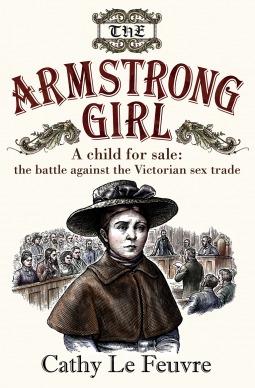
The Armstrong Girl by Cathy Le Feuvre

book cover
The Armstrong Girl
by Cathy Le Feuvre


ISBN-13: 9780745956992
Paperback: 224 pages
Publisher: Lion Books
Released: July 1, 2015

Source: ebook review copy from the publisher through NetGalley.

Book Description, Modified from Goodreads:
In November, 1885, Victorian England was scandalized by a court case which lifted the veil on prostitution and the sex trade. In the Old Bailey dock was the editor of the Pall Mall Gazette, which had recently published a series of articles on the sex trade; a reformed brothel keeper; and the second-in-command of The Salvation Army, Bramwell Booth. The group was accused of abducting a 13 year old girl, Eliza Armstrong.

They had, in fact, set up the scheme to expose the trade in young women. The resulting scandal triggered the raising of the Age of Consent in Britain from age 13 to 16. Many MPs and other men in positions of power were furious, and the campaigners were indicted under the 1861 Abduction Act. William Booth, founder of The Salvation Army, would later be acquitted, but others went to prison, martyrs for justice. The Armstrong Girl is the story of that scandal, and of those who fought for this essential change in the law.


My Review:
The Armstrong Girl tells how the practice of buying young girls for prostitution was exposed in 1885 in Britain. The author explained how a series of newspaper articles exposed this human trafficking, how this helped push through legislation that raised the age of consent from 13 to 16, and the resulting court case. There's also some background on the major players. The author quoted from the newspaper articles, the transcripts from the court cases, and from personal letters.

William Stead wanted to expose a topic that was considered too obscene to talk about and not something that women and child should ever hear about. To do this, he felt he had to prove that a 13-year-old could be bought. He got a reformed former brothel-keeper to help him buy such a girl. They did everything that would have happened to someone bought for the sex trade, only she wasn't violated.

Stead's resulting newspaper articles launched a public outcry that brought about a change in the age of consent, but a lot of people weren't happy about it. Some of them convinced the girl's parents to take legal action against William Stead, his helpers, and some members of the Salvation Army who had taken care of the girl after she had been bought. William Stead had, technically, abducted the girl under the current laws. The transcripts from the court cases show just how one went about obtaining a girl and why those involved went to this extreme.

The book was interesting, easy to follow, and should appeal to a general audience. I'd recommend it to anyone who is interested in the topic.


If you've read this book, what do you think about it? I'd be honored if you wrote your own opinion of the book in the comments.


Excerpt: Read an excerpt using Google Preview.

Wednesday, May 13, 2015

How to Get Dressed by Alison Freer

book cover
How to Get Dressed:
A Costume Designer's Secrets for Making Your Clothes Look, Fit, and Feel Amazing
by Alison Freer


ISBN-13: 9781607747062
Paperback: 256 pages
Publisher: Ten Speed Press
Released: April 14, 2015

Source: Review copy from the publisher.

Book Description from Back Cover:
Costume designer Alison Freer’s styling kit is a magical bag of tricks, built to solve every single wardrobe malfunction on earth. TV and film productions wait for nothing, so her solutions have to work fast. In How to Get Dressed, Alison distills her secrets into a fun, comprehensive style guide focused on rethinking your wardrobe like a fashion expert and making what’s in your closet work for you. She provides real-world advice about everything style-related, including:

Making every garment you own fit better
Mastering closet organization
The undergarments you actually need
The scoop on tailors and which alterations are worth it
Shopping thrift and vintage like a rockstar

Instead of repeating boring style “rules,” Alison breaks the rules and gets real about everything from bras to how to deal with inevitable fashion disasters. Including helpful information such as how to skip ironing and the dry cleaners, remove every stain under the sun, and help clueless men get their acts together, How to Get Dressed has hundreds of insider tips from Alison’s arsenal of tools and expertise.


My Review:
How to Get Dressed is about finding your unique style and making your clothing fit well. I love that she genuinely thinks that your body type is great--and it doesn't matter which body type you have. Instead of telling women to mimic the current fashion or her favorite style, the author encourages you to discover your own, unique style. Instead of telling you to buy expensive, uncomfortable clothes and underclothes to match the currently fashionable "look," she encourages you to get clothes that fit well and a tailor who can do some cheap alterations so that your clothes look great on you and you feel great in them. I love her general attitude and mindset.

The author discusses "fashion rules" and when they can be broken. She gives tips on how to deal with clothing emergencies (safety pins and toupee tape to the rescue! Plus how to get out any stain), how to find clothes that fit, what clothes can be cheaply altered to fit well if you like the style, and how to find good vintage clothing. She discusses proper care and washing of clothing, including when do you really need to use a dry cleaner. She tells how you can organize your clothing (including underclothes, shoes, etc.) in a way so that you can easily see everything you own. There's only one chapter on how men's clothing should fit, and the rest is focused on women.

Basically, she covered a little bit of everything clothing-related in an upbeat way. If you don't feel comfortable shopping for or in your clothing and don't know much about clothing care, this may be the book to help you.


If you've read this book, what do you think about it? I'd be honored if you wrote your own opinion of the book in the comments.


Excerpt: Read an excerpt using Google Preview.

Sunday, June 29, 2014

Love Isn't Supposed to Hurt by Christi Paul

book cover
Love Isn't Supposed to Hurt
by Christi Paul


ISBN-13: 9781414374130
ebook: 200 pages
Publisher: Tyndale House Publishers
Released: May 18, 2012

Source: A free eBook offer.

Book Description, Modified from Back Cover:
Like millions of other women, Christi Paul blamed herself for the emotional abuse heaped on her by her first husband, whose violent, profanity-laced tirades left her feeling as though she had no value, no self-worth, and nowhere to turn for help. Then one day, when Christi was taking refuge in a church parking lot, the verse “Trust in the Lord with all your heart and lean not on your own understanding” popped into her head. In that moment she realized she did have someplace to turn after all. Holding fast to her faith, Christi began the arduous process of rebuilding her self-image and regaining control of her life.


My Review:
Love Isn't Supposed to Hurt is a memoir about (primarily) verbal abuse. I appreciate that the author wrote this book. A teenage girl that I care about seems remarkably willing to date boys that treat her poorly, and this book helped me understand better where she might be coming from emotionally. The author explained how she meet and married a man who was verbally abusive, what it took for her to leave the situation, and how she healed afterward. She includes some questions in the back that she found helpful to think through.

The author was very clear that verbal abuse is wrong and no one deserves this abuse. However, one of the author's counselors apparently wanted her to discover so many positive outcomes from surviving the experience that she'd be willing to thank her husband for the abuse. Huh?! That's sick! As a Christian, she should be thanking God for bringing positive lessons and growth from the experience, not thanking the person who did the abuse. Anyway, it's worth reading despite this.


If you've read this book, what do you think about it? I'd be honored if you wrote your own opinion of the book in the comments.


Excerpt: Read an excerpt using Google Preview.

Thursday, June 6, 2013

The Dressmaker of Khair Khana by Gayle Tzemach Lemmon

book cover
The Dressmaker of Khair Khana
by Gayle Tzemach Lemmon


ISBN-13: 9780061732478
Trade Paperback: 304 pages
Publisher: Harper Perennial
Released: March 20, 2012

Source: Bought at library used book sale.

Book Description, Modified from Back Cover:
Kamila Sidiqi's life changed overnight when the Taliban seized control of Afghanistan. After her father and oldest brother were forced to flee, she became responsible for providing for her five younger siblings. Banned from school, confined to her home, and armed only with determination, she picked up a needle and thread to create a thriving business that saved their lives.

The Dressmaker of Khair Khana tells the incredible true story of this unlikely entrepreneur who mobilized her community under the Taliban. A story of war, it is also a story of family, faith, and resilience in the face of despair. Kamila Sidiqi's journey will inspire you.


My Review:
The Dressmaker of Khair Khana is a biography about a woman--and her family and community--in Kabul, Afghanistan. The book covered September 1996 to November 2001, roughly the period that the Taliban controlled Kabul.

While we do get some information about life before and after this period (with the last event reported happening in 2009), it was mainly a description of life for women before and during Taliban control. Women had to find ways to support their families even though they weren't allowed to work outside their homes. Kamila and her sisters started a tailoring business to support their family and to help provide jobs for other women in the neighborhood.

It was an interesting and suspenseful tale since running the business held many dangers, yet not doing so would mean starvation for many families. I found the story very readable and interesting.

I would have been interested in more about how life changed for women in Afghanistan after the Taliban left as I'm sure that held new and different challenges. But I understand the focus was intended to be on women entrepreneurs under the extreme challenges created by Taliban control.


If you've read this book, what do you think about it? I'd be honored if you wrote your own opinion of the book in the comments.


Excerpt: Read an excerpt using Google Preview.

Wednesday, August 8, 2012

Lark Rise to Candleford by Flora Thompson

book cover
Lark Rise to Candleford
by Flora Thompson


ISBN-13: 9781567923636
Paperback: 556 pages
Publisher: Nonpareil Books
Released: 1945, 2010

Source: Borrowed from my local library.

Book Description, Modified from Back Cover:
Flora Thompson (1876-1947) wrote about English country life at the turn of the twentieth century. This trilogy of novels--Lark Rise (1939), Over to Candleford (1941), and Candleford Green (1943)--are published together in this omnibus version and tell what life was like in a hamlet, a village, and a town as she grew up and lived in these various places.

Through the semi-autobiographical character of young Laura, Flora Thompson chronicles how people's lives changed from living off the land and practicing the "old ways" to a more urban existence. From May Day celebrations, harvest times, traditional sons and games, to descriptions of the types of people who lived there, Thompson builds a personal and vivid portrait of a cherished place and a vanished time.


My Review:
Lark Rise to Candleford is an autobiography about a woman who grew up in a small, very poor hamlet in England from 1876 to 1892. (She refers to herself as "Laura" instead of writing as "I.") As a teenager, she often spent her summers in a nearby town where her better-off cousins lived. At age 16, she went to work in a post office at the edge of that town. She described life--education, games, holidays, etc.--at that time, but she also tells stories about things she did relating to these subjects. The book reminded me of the Laura Wilder books, but this was less a narrative about Flora's life and more a telling about how people lived with some related stories (not in any order) relating to the current topic.

It was interesting and engaging. I'd recommend this book to anyone who enjoys learning more about how people lived at other places and times.


If you've read this book, what do you think about it? I'd be honored if you wrote your own opinion of the book in the comments.


Excerpt: Read an excerpt using Google Preview.

Tuesday, March 9, 2010

Life Inside the "Thin" Cage by Constance Rhodes


book cover


Life Inside the "Thin" Cage
by Constance Rhodes


Trade Paperback: 240 pages
Publisher: Shaw Books
First Released: 2003

FINDINGbalance website


Source: Bought from Half.com.

Back Cover Description (slightly modified):
"I don't have an eating disorder. I just watch what I eat..."

For millions of women, "watching" what we eat has become an outright obsession. Frustrated by the unrealistic standards of beauty presented by today’s media, many women have become trapped in a never-ending pattern of chronic dieting. Daily, they endure destructive self-talk such as “I can’t eat that or I’ll get fat” or “If I could just lose a few more pounds everything would be better.”

Chronic dieters may be any shape or size but they have one thing in common: They are often left to suffer alone with an undiagnosed “sub-clinical” eating disorder. Such sub-clinical disorders include eating habits that are unusual, even unhealthy, but do not fit the technical classifications of anorexia or bulimia. Because sub-clinical disorders are largely unrecognized, we may refuse to admit to our friends--and even to ourselves--that there is any problem at all.

*Do you categorize some foods as "safe" and others as "off-limits"?

*Do you believe that if you were to gain weight then people would no longer like you?

*Are you tired of worrying about weight, dieting, and food all the time?

If this sounds like you, discover a new road to emotional, physical, and spiritual health--and freedom--that lies beyond Life Inside the "Thin" Cage. Readers will find personal stories, insights into their secret patterns and habits, reassurance that they are not alone, checklists, self-tests, and, best of all, a new road to emotional, physical, mental and spiritual freedom.


Review:
Life Inside the "Thin" Cage is a well-written and helpful book for women and men who are dissatisfied with their bodies (specifically those who "feel fat").

I don't think I've ever done a diet in my life. I simply try to eat a moderate amount and eat a large variety of foods. However, I read a different book that briefly touched on eating disorders (including sub-clinical ones) which included the "I just watch what I eat" quote from this book as well as a recommendation for it. Since I'd say "I just watch what I eat," too, I began to wonder what the difference was between me and someone with a problem, so I got this book.

I agree that it's excellent. It reinforced my contentment with how I look, and I suspect it would be very helpful for anyone who struggles with "feeling fat," who's stuck in a constant cycle of dieting, and/or who has set rules when it comes to eating.

The book had five parts. Part One explained what was meant by "chronic dieting" and "disordered eating." It explored some motivations for chronic dieting as well as self-tests and questions to help the reader identify if they have a problem. She also listed the signs of health problems caused by disordered eating.

Part Two explored the factors that lead to chronic dieting and disordered eating. Part Three explained what keeps people trapped in chronic dieting and helps the reader to identify things that trigger the desire to diet. Part Four gave the reader truths to replace the lies that trap them in disordered eating habits. Part Five gave steps to help the reader break free from chronic dieting and disordered eating.

Throughout the book, author openly shared her struggles with chronic dieting and also shared stories from many others. She also included medical information about disordered eating. The author occasionally referred to God and sometimes included a sample prayer at the end of a chapter, but God wasn't the focus of her suggestions (as in, this wasn't a "Christian book.")

The book was easy to understand, encouraging, and practical. Overall, I'd highly recommend it to anyone dealing with "I feel fat" and eating issues.


If you've read this book, what do you think about it? I'd be honored if you wrote your own opinion of the book in the comments.


Excerpt from Chapter One
"I don't have an eating disorder. I just watch what I eat..." These were the words I repeated time and again to anyone who suggested that I was overly concerned with weight and dieting. After all, I reasoned, isn't it normal to take pride in maintaining a slim figure?

In Western society today, it is culturally acceptable and even expected that women who want to be successful and respected will be on a never-ending diet. At every turn, we face images of smiling, beautiful, thin people. We can't walk through a shopping mall without realizing that unless we go to extreme measures, we're just not going to be able to stack up against the ideal of beauty that we see hanging in store windows. Even if we don't leave home, an innocent evening in front of the television supplies multiple reminders of the standards we consistently fail to meet.

So we have learned how to force our often rebellious bodies into the crippling corset of conformity. We have exercised, skipped meals, switched to low-fat or no-fat foods, or gradually decreased our overall intake of calories to a point that ensures continued weight loss. As time has gone by, some of us have learned the art of replacing a burger and fries with a Diet Coke and a fruit plate, while others live from diet to diet--a never-ending cycle of feast, famine, elation, and self-loathing.

Even if we are successful at losing a few pounds, it seems we only find new things to dislike about the size and shape of our body. "If I could be just one size smaller," we lament, "then everything would be better."

And so the vicious cycle continues, sapping us of time, energy, satisfaction, and self-esteem. Without realizing it, we've become trapped in the "cage" we so lovingly call "thin"--endlessly striving to meet an ideal that seems like the answer to our discontent.

Read the rest of the first chapter.

Tuesday, January 12, 2010

The Male Factor by Shaunti Feldhahn


book cover


The Male Factor
Expanded Edition
by Shaunti Feldhahn


Hardback: 336 pages
Publisher: Multnomah
First Released: 2009

Official Book Website
Publisher Book Page


Source: Review copy from publisher.

Back Cover Description:
Millions of women gained eye-opening insights about the inner lives of men through Shaunti Feldhahn’s best-selling book For Women Only. Now with The Male Factor, Feldhahn brings her innovative research approach to the workplace to help women understand their male colleagues. Based on a nationwide survey and confidential interviews with thousands of men whose anonymity was guaranteed, her book reveals the private thoughts and attitudes that men rarely disclose but every woman needs to know.

Never before has an author gotten inside the hearts and minds of men in the workplace—from CEOs to nonprofit managers, from lawyers to factory workers—to discover what they commonly think about women on the job, what their expected “rules” of the workplace are, what “managing emotion” means, and what factors improve or harm a man’s respect for a female co-worker.

Among the little-known but critical insights The Male Factor reveals are:

o how men, with rare exception, view almost any emotional display as a sign that the person can no longer think clearly (as well as what men perceive as emotion in the first place)
o why certain types of trendy attire may actually sabotage a woman’s career
o which little-known signals ensure that a man’s perception of a strong female colleague is positive (“assertive and competent”) instead of negative (“difficult”)

Even women who have navigated male-dominated work environments for years have expressed surprise at these and other revelations in the book. Some readers may find them challenging. Yet The Male Factor delivers a one-of-a-kind opportunity for women to understand how male bosses, colleagues, subordinates, and customers privately think, and why they react the way they do. These vital insights enable each woman to make informed decisions in her unique workplace situation.

In this expanded Christian edition, Feldhahn builds on the same research and information as in the general-market edition, but speaks directly to the interests and questions of women of faith, whether their workplace is a part-time ministry or a Fortune 500 corporation. This edition of The Male Factor also delivers invaluable advice from senior Christian women who have broad experience in dealing with these questions, understand and share the reader’s values, and want to help other women achieve the best possible work relationships.


Review:
I've read several of Shaunti's other books (For Women Only, For Men Only, For Young Women Only, and For Parents Only) and loved them. I'd highly recommend those books. As I read them, I'd say, "Really? Wow, but that does explain..." and feel enlightened. I also felt like they gave insights without pigeon-holing "all men" or "all women" as being a certain way. The survey questions also opened up dialogue with my dad and my boyfriend-of-the-time and helped me learn which points applied to them.

So I was excited when I was offered the chance to review The Male Factor...even though I've been self-employed most of my adult life, and I've never had trouble dealing with men in guy-centric situations.

After reading it, I think the women who will most benefit from this book are those who were moving up in a company but now feel like they've hit the "glass ceiling"--they're being passed over for promotion or leadership responsibilities or are feeling like their input is being deliberately ignored. The information in the book can help them understand how their actions may be perceived by their co-workers (and not always just by men) and what they can do to fix the situation.

Unlike her previous books, very few survey questions were actually shown (the exact question with the results), which disappointed me. Instead, especially in the first half of the book, each chapter was mostly references to problems she heard mentioned frequently by men and the real life examples they gave to illustrate the point. Shaunti usually tied this in to how men are geared differently than women and thus behaved differently in the workplace--or were at a loss of how to deal with women who act differently in the workplace. At the end of each chapter, she gave excellent and do-able advice on how to deal correctly with those situations.

I really enjoyed chapter 12, the "Counsel from Experienced Christian Women." I also thought that chapter 10 had information that all women, working or not, would benefit from reading.

However, I found some sections and chapters--especially in the first third of the book--more confusing than enlightening. Often the issues raised weren't really male-female differences, and I'd agree that the behavior in the example wasn't appropriate work behavior (for men or women). Other times I was ticked at the guys because the woman in the example picked up on something "because she was female" but lacked experience in dealing correctly with the situation. If trained how to do it correctly or allowed to learn from the experience, she would have become a real asset in the same situation in the future. Yet the men assumed that the mistake was also inherently "because she was a female" and gave up on her instead.

These sections left me feeling frustrated and depressed. Why? Because I didn't feel like this book was intended for or could be used to open dialogue and clear up misunderstandings in the workplace. The book was intended to help women change their behavior (if they choose) to avoid triggering these misconceptions.

So, as I said, I think The Male Factor would definitely be helpful to women who are "stuck" on the corporate ladder. Women who work in a male-dominated field and who want to learn how to get along better with the men at work will also find the book useful.


If you've read this book, what do you think about it? I'd be honored if you wrote your own opinion of the book in the comments.


Excerpt from Chapter One
“Are you saying women don’t already know that?”

The charismatic African-American businessman sitting next to me in first class looked at me in disbelief. I was flying home from speaking at a women’s conference, and we were only a few minutes into the usual “What do you do?” airplane conversation. Then I shared something that apparently stunned him.

I had explained that I was a financial analyst by training, had worked on Wall Street, and was now, unexpectedly, an author and speaker about relationships.

His inevitable question: “What’s your main topic?”

“Men.” I grinned at his wry expression. “I spent a few years interviewing and surveying a few thousand men. My last book, For Women Only, identifies ways that men tend to think and feel privately, that women tend not to know.”

He folded his arms across his chest, and it was his turn to chuckle. “OK,” he said, “hit me with one.”

So I shared one of my findings about men—one that I will share with you in the following pages—and that is when the amusement turned to disbelief.

When I confirmed that even the most astute women may not know that particular truth about men, I could see that suddenly, his thoughts were off in a universe of their own.

“That explains something!” he finally said. “You see, I’m a corporate trainer and consultant. Fortune 100 corporations bring me in to help with leadership and strategy at the highest levels of the organization. And all too often, I see skilled and talented women sabotage their careers because they treat the men they work with in a way that no man would treat another man.”

He looked at me with awakening interest. “But from what you’re telling me, these women probably don’t even realize that that is what they are doing.”


Read the rest of chapter one.

Tuesday, December 22, 2009

Louisa May Alcott by Harriet Reisen


Louisa May Alcott cover


Louisa May Alcott:
The Woman Behind Little Women
by Harriet Reisen


Hardback: 384 pages
Publisher: Henry Holt
First Released: 2009

Book at Publisher Website


Source: Review copy from publisher.

Book Description from Publisher Website:
A vivid, energetic account of the life of Louisa May Alcott, whose work has delighted millions of readers.

Louisa May Alcott portrays a writer as worthy of interest in her own right as her most famous character, Jo March, and addresses all aspects of Alcott’s life: the effect of her father’s self-indulgent utopian schemes; her family’s chronic economic difficulties and frequent uprootings; her experience as a nurse in the Civil War; the loss of her health and frequent recourse to opiates in search of relief from migraines, insomnia, and symptomatic pain. Stories and details culled from Alcott’s journals; her equally rich letters to family, friends, publishers, and admiring readers; and the correspondence, journals, and recollections of her family, friends, and famous contemporaries provide the basis for this lively account of the author’s classic rags-to-riches tale.

Alcott would become the equivalent of a multimillionaire in her lifetime based on the astounding sales of her books, leaving contemporaries like Nathaniel Hawthorne, Herman Melville, and Henry James in the dust. This biography explores Alcott’s life in the context of her works, all of which are to some extent autobiographical. A fresh, modern take on this remarkable and prolific writer, who secretly authored pulp fiction, harbored radical abolitionist views, and completed heroic service as a Civil War nurse, Louisa May Alcott is in the end also the story of how the all-time beloved American classic Little Women came to be. This revelatory portrait will present the popular author as she was and as she has never been seen before.


Review:
This biography of Louisa May Alcott was a well-written, enjoyable read. Harriet Reisen gave a chronological account of the Alcott's lives while relating how the national events of the time effected them and how they influenced history (through their Transcendental movement, abolition movement, etc.). She also worked in many quotes taken from letters and the personal journals kept by each member of the family.

The first 87 pages were mainly about Louisa's parents (Abby and Bronson) and their friends. If you're interested in Ralph Waldo Emerson, Henry Thoreau, and other famous Transcendentalists, you'll probably enjoy this section more than I did. I was continually exasperated with her parents and, while I saw the value of showing the influences Louisa grew up with and how they affected her writing, I didn't like her parents and wanted to get on to focusing on Louisa.

From page 88 to 302, Harriet Reisen focused on Louisa and, to a lesser degree, her sisters. This section was lively and very fun to read though Louisa didn't have a very easy life. I liked how Harriet Reisen tied Louisa's experiences to her books: Louisa would often take real life events and work them into fictional accounts.

The rest of the book was references and notes about the quotes and information. There were no pictures. I would have at least enjoyed a picture of Louisa.

There was no bad language. Overall, I'd recommend this enjoyable biography to anyone who loves Louisa May Alcott's novels and wants to know more about her.


If you've read this book, what do you think about it? I'd be honored if you wrote your own opinion of the book in the comments.


Excerpt from Chapter Four (page 54)
[Note: Abby is Louisa's mother.]

The Alcotts were slipping out of genteel poverty and into the grueling variety. When Abby's cousin Hannah Robie came at Thanksgiving in 1841, she brought a bundle of old clothes for Abby to use to make dresses for her girls. Abby could rip them apart, turn the pieces inside out, and resew them so the unfaded side of the fabric showed.

During the visit, Abby took Hannah to see an abandoned woman with four children. To help them, the Alcotts had reduced their own meals to two a day. Now the "sweetness of self-denial" was about starvation, not plumcakes. The urgency of the situation became clear: Abby entrusted Hannah with the sale of her silver teapot and spoons. Hannah Robie returned to Boston carrying the tale of Abby's troubles all over town.

Louisa, observing the adults from a corner of the kitchen while stitching a hem or playing with her doll, missed very little. At almost nine, hunger told her how dire things were; as an adult, she would give more of her money to feed children than to any other cause. Her raw hands reminded her that she and Anna performed dirty chores their playmates never thought about; in Little Women, she would give the March family a servant, and she herself would have ten when she died.

Tuesday, December 15, 2009

When I Was a Soldier by Valerie Zenatti


When I Was a Soldier cover


When I Was a Soldier
by Valerie Zenatti


Hardback: 240 pages
Publisher: Bloomsbury USA Childrens
First Released: 2005


Source: Won from Color Online.

Back Cover Description:
Like all young Israelis, Valerie Zenatti ceased to be a private citizen on her eighteenth birthday. As is the law, she then enlisted in the national defense service, where for the next two years she endured rigorous training, harsh living conditions, and, eventually, top secret missions with the elite secret service.

Between target practice and sentry duty, Valerie is an ordinary teenage girl. She wonders how her friends and family back home are coping with her absence. She can't stop thinking about her ex-boyfriend in Jerusalem. And, torn between her French heritage and her adopted homeland, she also begins to question how much she really believes in the nation she now defends with her life.

Here, in the arresting voice of a woman who has borne witness, is a thoughtful, compelling memoir of a young soldier--and a country--in turmoil.


Review:
When I Was a Soldier was an interesting memoir. Valerie was born in France in 1970, immigrated to Israel with her family when she was thirteen, and joined the Israeli army five years later when she turned eighteen. The memoir focused as much on her personal life as on her training.

The first fourth of the memoir was about the pressure of taking her bac exams...especially since her boyfriend had just broken up with her. The next part--about half of the book--was about her training. Most of this section described her basic training which occurred on an all-girls base. It was interesting to see the similarities and differences between the Israeli basic training and what I've read about American basic training. She also briefly described her training in intelligence work and the stress she was under to learn, learn, learn without mistake! The final section described some of what she did in her intelligence work. She mainly focused on the first year of her two years of military service.

What I found most interesting was her descriptions of the discussions she had with her fellow soldiers and other citizens about the ongoing conflict with the Palestinians. A wide variety of views were briefly covered, giving a feel for the complexity of the situation. She also talked about the diversity among the Israeli Jews--their different cultural backgrounds, political views, and level of religious devotion. Valerie's French background was apparently a bit unique in Israel, but her secular view (she didn't believe in God) didn't seem uncommon.

The memoir was written in first person present tense ("I go" instead of "I went"), but this didn't bother me and I usually didn't even notice. There was a minor amount of bad language and some swearing. There was no explicit sex (though she and her friends were sexually active). Overall, I'd recommend this memoir to those interested in what life is like for Israeli eighteen-to-twenty-year-old girls.


If you've read this book, what do you think about it? I'd be honored if you wrote your own opinion of the book in the comments.


Excerpt from Chapter One
'We're three losers in a land of losers,' Yulia says, spitting her words out and raising her eyebrows in an expression no one would dare argue with. 'This is the arsehole of the world,' she goes on, 'and nothing special ever came out of the arsehole of the world.'

I look into those big blue eyes she's so proud of, especially since she got her contacts. She used to have horrible plastic glasses, with really thick lenses, and she squinted. Long-sighted, astigmatic and with a twinkle in her eyes, as my aunt would say. She carried the burden of it all through her childhood. Since she swapped her glasses for two tiny lenses, it's as if she wants to make the whole world pay for her past humiliations. She's getting her revenge. Sometimes all you can see in her eyes is anger and contempt, or--worse than that--she's lying and her eyes are dressed up in this immeasurable innocence, all blue and transparent, as she talks to one of her teachers, or to a boy. I hate her big blue eyes. I hate my best friend's eyes with a sneaky, furious, impotent sort of hate. And I feel just as much loathing for the way she sometimes speaks, deliberately foul-mouthed and hard, as if she's saying, 'I'm free now. I'm no longer my parents' nice little girl.'

She's my best friend, all the same...I have to admit it and she seems to agree. At school we've been classified as inseparable, no one could imagine bumping into one of us without the other. We've been sitting next to each other systematically for four years, and we phone each other on average eight times a day. When I'm not with her I'm with Rahel, my other best friend.

They were both born in what was once the USSR. Yulia's from Tashkent in Uzbekistan. She likes saying those names in front of me - Tashkent, Samarkand - as if there were treasure sparkling on every street corner back there. In front of other people from Russia she emphasises the fact that her father's of German origin and her mother Romanian; I can tell she's ashamed of Uzbekistan. Everyone else seems to think that that's where the arsehole of the world is. Personally, I haven't got very fixed ideas about the anatomy of our planet.

Tuesday, September 29, 2009

Terrify No More by Gary A. Haugen


Terrify No More


Terrify No More
by Gary A. Haugen and Gregg Hunter


Hardback: 240 pages
Publisher: Thomas Nelson
First Released: 2005

International Justice Mission website
Buy from Amazon


Source: Bought from Half.com

Book Description (from the publisher's website):
In a small village outside of Phnom Pehn, little children as young as five years old were forced to live as sex slaves. Day after day their hope was slipping away.

Tireless workers from International Justice Mission (IJM) infiltrated the ring of brothels and gathered evidence to free the children. Headed up by former war-crimes investigator Gary Haugen, IJM faced impossible odds-police corruption, death threats, and mission-thwarting tip-offs. But they used their expert legal finesse and high-tech investigative techniques to save the lives of 37 young girls and secured the arrest and conviction of several perpetrators. Terrify No More focuses on this dramatic rescue story, and uses flashbacks to tell those of many other victims who were given a second chance at life.


Review:
Terrify No More is a gripping, well-written nonfiction book about a number of rescues the International Justice Mission has done. The main focus of the book is their attempt to rescue 40 children under the age of 14 from forced prostitution in a village near Phnom Pehn in Cambodia.

While the book is clearly about International Justice Mission's work, I felt like the main focus was raising people's awareness about modern slavery and injustice. It covered much of the same information as Sex Trafficking: Inside the Business of Modern Slavery, but it describes less graphic violence and is less technical.

The book describes IJM rescues of forced prostitutes, bonded slaves, and illegally imprisoned people worldwide. It details how the IJM team finds out about cases, gathers evidence, works with the local police to stage a raid, helps to prosecute the perpetrators, and finds aftercare facilities (and what they're like) for the victims. It also describes how victims can end up in these situations and what can be done to stop it.

The International Justice Mission is a Christian organization and the author does talk about how his faith influenced his decisions, but he does not assume the reader is Christian. I think Christians and non-Christians alike will enjoy this book.

I found the book a very inspiring page-turner that made me really appreciate the freedoms we tend to take for granted. If you like thrillers or are interested in undercover detective work or in humanitarian work, you'll probably enjoy reading this book. Overall, I'd highly recommend it.


If you've read this book, what do you think about it? I'd be honored if you wrote your own opinion of the book in the comments.


Excerpt from Chapter Thirty-Seven
The lead lawyer in these police training programs and other casework in Latin America has been our brilliant colleague from Puerto Rico, Jamie Farrant. He directs extensive IJM casework in Peru, Honduras, Mexico, and Bolivia in partnership with indigenous human rights organizations. Recently, case referrals have forced Jaime to also enter the ugly world of sex trafficking that exploits young girls trying to see a better life for their families. While conducting investigations with Robert Earle along the Mexico-Guatemala border, Jaime had to join Robert in playing the part of a sexual predator, and as he shared with me back at HQ about the experience, the agony for Jamie of drawing near to such pain was palpable. It ran very rough over Jamie's huge and compassionate heart.

"Each night becomes more difficult...once again brothel hopping, once again to look for girls, once again to pretend I enjoy doing this, once again a pedophile," Jamie explained. "Once again, we go out until 3:00 A.M. What a disgusting life...."

"One week of doing this is just too long, but what about the victims? What do we do about those girls who cry daily while they put on their masks? How much harder for them when they're only teenagers? How much harder when they recall that they were deceived into coming to this crowded but lonely and heartless place?"

It's the struggle we all experience at IJM when we encounter the world of the victim....

"One of the hard parts of posing as a pedophile," Robert Earle said, "is actually asking the questions of the pimps, using language you don't normally use, talking about things you just don't talk about.

"I need to get the pimp on tape telling me what the girls will do, what sex acts they can perform, and I have to be explicit with him. Of course, that's very unnatural, but it has to appear natural in order to get the evidence we need."

I know from my experience in Svay Pak that those pictures don't quickly fade from one's memory. It is nauseatingly uncomfortable to play the role. But such are the sacrifices my colleagues make--hearts that cannot remain unbroken, minds that now store images that can't be easily erased. And they continue to place themselves voluntarily in these situations where the thick, heavy darkness is palpable. They do it because they know their temporary presence in that underworld may be the only hope innocent victims have of seeing the light of freedom and experiencing the joy of rescue.


Read chapter one.