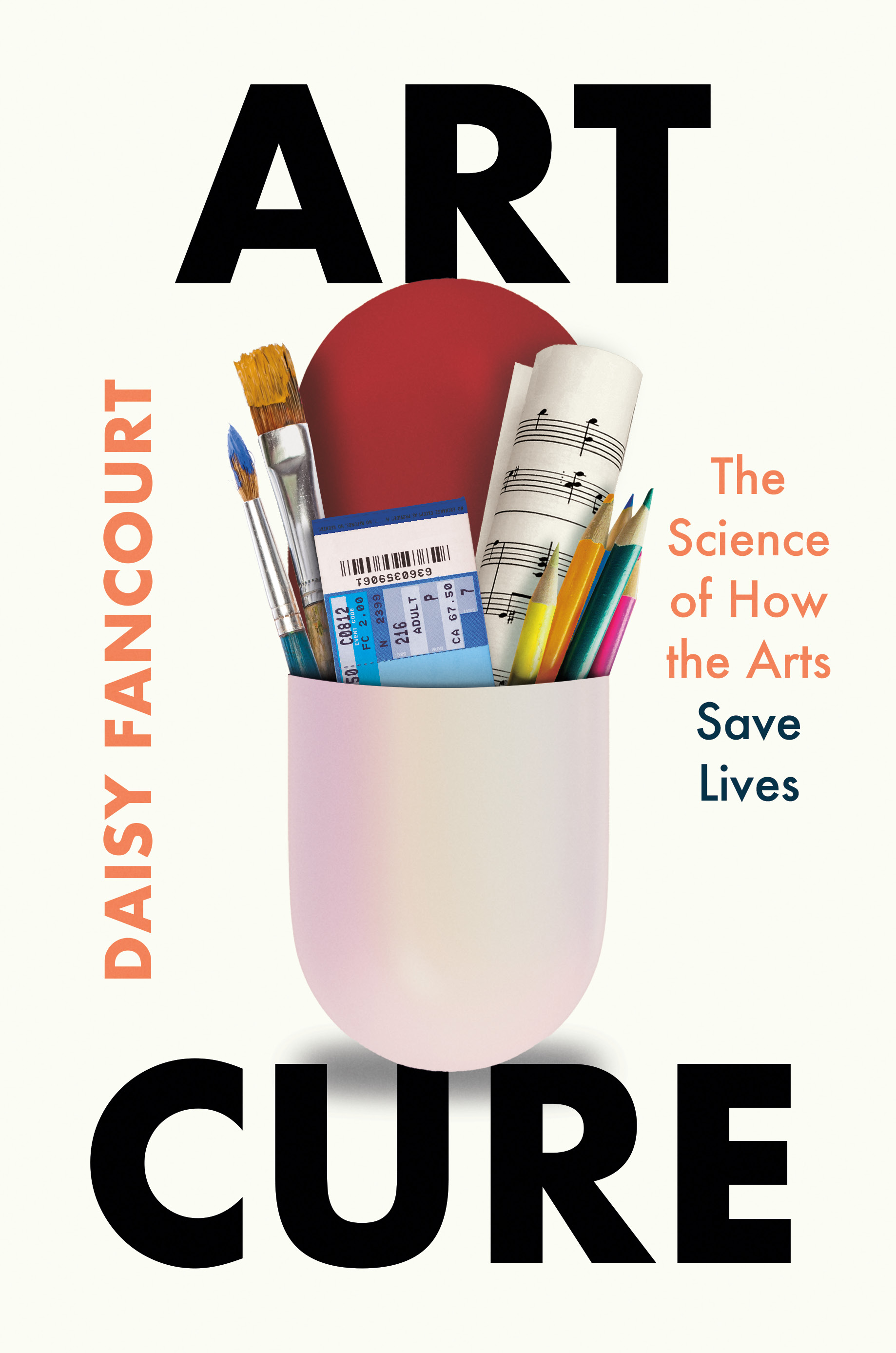
Art Cure
by Daisy Fancourt
ISBN-13: 9781250364531
Hardcover: 320 pages
Publisher: Celadon Books
Released: February 3, 2026
Source: ebook review copy from the publisher through NetGalley.
Book Description, Modified from Goodreads:
From cradle to grave, engaging in the arts has remarkable effects on our health and well-being. Music supports the architectural development of children’s brains. Artistic hobbies help our brains to stay resilient against dementia. Dance and magic tricks build new neural pathways for people with brain injuries. Arts and music act just like drugs to decrease depression, stress, and pain, reducing our dependence on medication. Going to live music events, museums, exhibitions, and the theater decreases our risk of future loneliness and frailty. Engaging in the arts improves the functioning of every major organ system in the body, even helping us to live longer.
This isn’t sensationalism, it’s the results of decades of studies gathering data from neuroimaging, molecular biomarkers, wearable sensors, cognitive assessments, and electronic health records. From professor Daisy Fancourt, an award-winning scientist and science communicator and director of the World Health Organization’s Collaborating Centre for Arts and Health, this book will fundamentally change the way you value and engage with the arts in your daily life and give you the tools to optimize how, when, and what arts you engage in to achieve your health goals.
My Review:
Art Cure is about how doing art can help a person's health. The author has personally researched how arts can impact our health, from studies to see if more frequent arts engagement leads to better health outcomes over the years to specific experiments done to see how calming music can help in hospitals and similar ideas. She also included experiments done by others that show the impact that viewing or doing various arts (reading, dancing, making or listening to music, visiting the theater, etc.) can have on health outcomes. She gave examples, from singing to a premature baby to help the baby stay calm and thrive to teaching magic tricks as a way to make physical therapy fun for kids.
The author summarized how the various studies were set up and the results but also usually gave an example of a specific person to show how the principle has worked out in someone's actual, real life. She didn't get deep into the science except to explain just how much we could really conclude from the various studies. She ended each chapter by suggesting various ways we could practically use the information in that chapter: how long do we do an activity, how frequently, and what sort of arts might have the desired effect. I had no trouble following the author's points and found the information both interesting and something that I could easily act upon. Overall, I'd recommend this interesting book.
If you've read this book, what do you think about it? I'd be honored if you wrote your own opinion of the book in the comments.


 Posts
Posts


No comments:
Post a Comment